The health plan industry has entered a new financial era. For decades, cyclical underwriting performance largely determined success. Today, long-term competitiveness increasingly depends on an organization’s ability to preserve capital, manage medical trend, and continue investing even when competitors retrench.
HealthScape’s annual health plan financial performance report examines the financial health of the US health insurance industry across four dimensions: profitability, revenue growth, medical cost trend, and capital strength.*
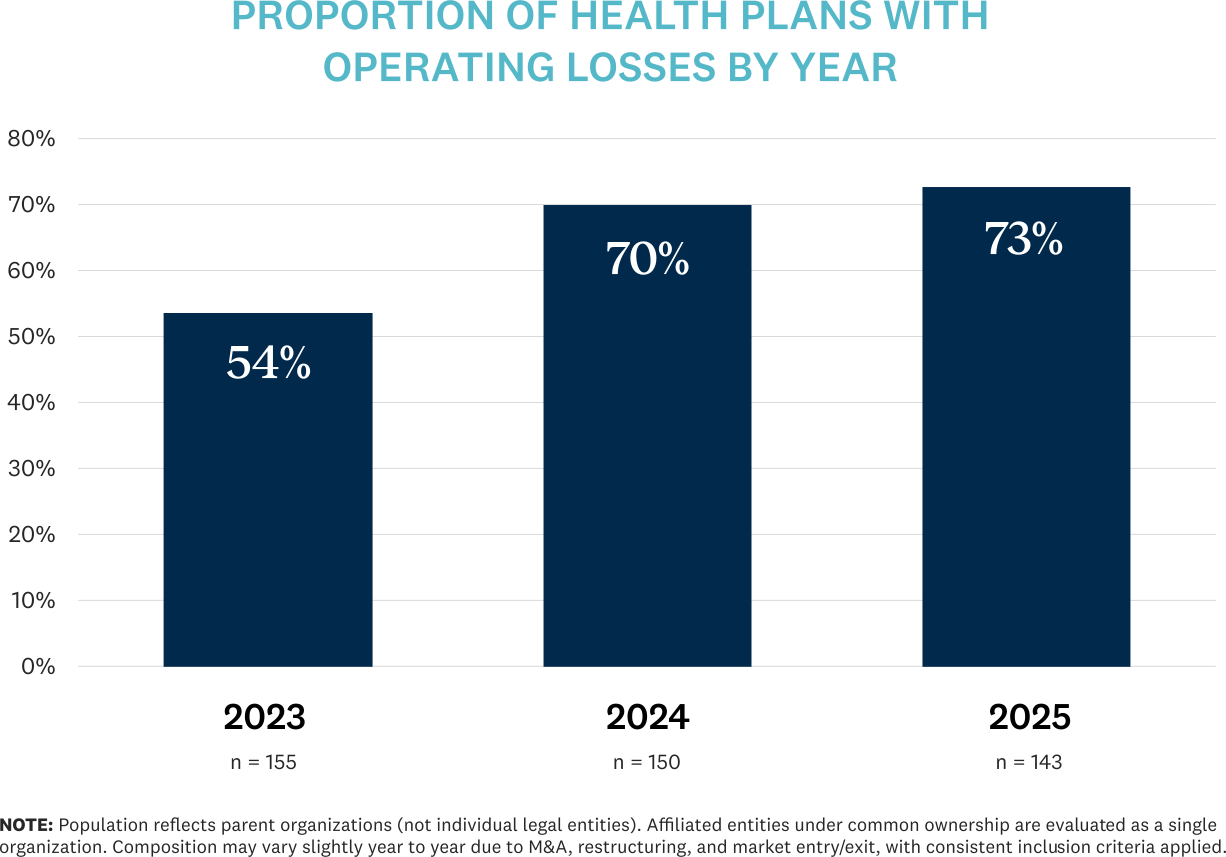
This year’s analysis reveals that nearly three-quarters of health plans reported operating losses in 2025. While premium revenue continued to grow, medical costs outpaced those gains.
Several years of sustained financial pressure have left many organizations in increasingly vulnerable positions. Most health plans are actively working to address costs, with some improvement visible, particularly in administrative cost trend. Yet these gains have not been sufficient to offset broader financial pressures.
Capital erosion is widening the gap between financially resilient and financially vulnerable health plans. Organizations with sufficient capital are strengthening reserves, investing in new capabilities, and expanding their strategic options. Meanwhile, organizations experiencing sustained losses and eroding capital positions are facing increasingly difficult choices, including retrenchment, affiliation, or market exits.
While organizations have made progress, long-term financial resilience will require more than incremental operating improvement. Health plans must fundamentally adapt how they allocate capital, manage medical trend, and work with providers.
Three interconnected priorities—rebuilding capital strength, advancing more holistic approaches to medical management, and reshaping provider strategy—will be essential to creating financial resilience and sustaining long-term competitiveness.
*Our 2026 analysis is based primarily on year-end 2025 statutory financial data, the most recent complete reporting year available. Although several large health plans reported improving quarterly results during the first half of 2026, this assessment provides a consistent, year-over-year view of the industry’s underlying financial performance.
Health plan operating losses are sustained and growing
The health plan industry remains under sustained financial strain, with a widening separation between organizations that are adapting and those that are not.
PROFITABILITY
The percentage of health plans reporting operating losses continues to grow
Some health plans improved their financial performance in 2025: 42% of health plans improved their operating margin over 2024, and 16% of health plans that experienced losses in 2024 were able to turn their fortunes around and become profitable in 2025. However, the fact of the matter remains that nearly three-quarters of health plans still reported operating losses in 2025, underscoring the persistence of the industry’s financial challenges and the growing difficulty many organizations face in restoring sustainable profitability.
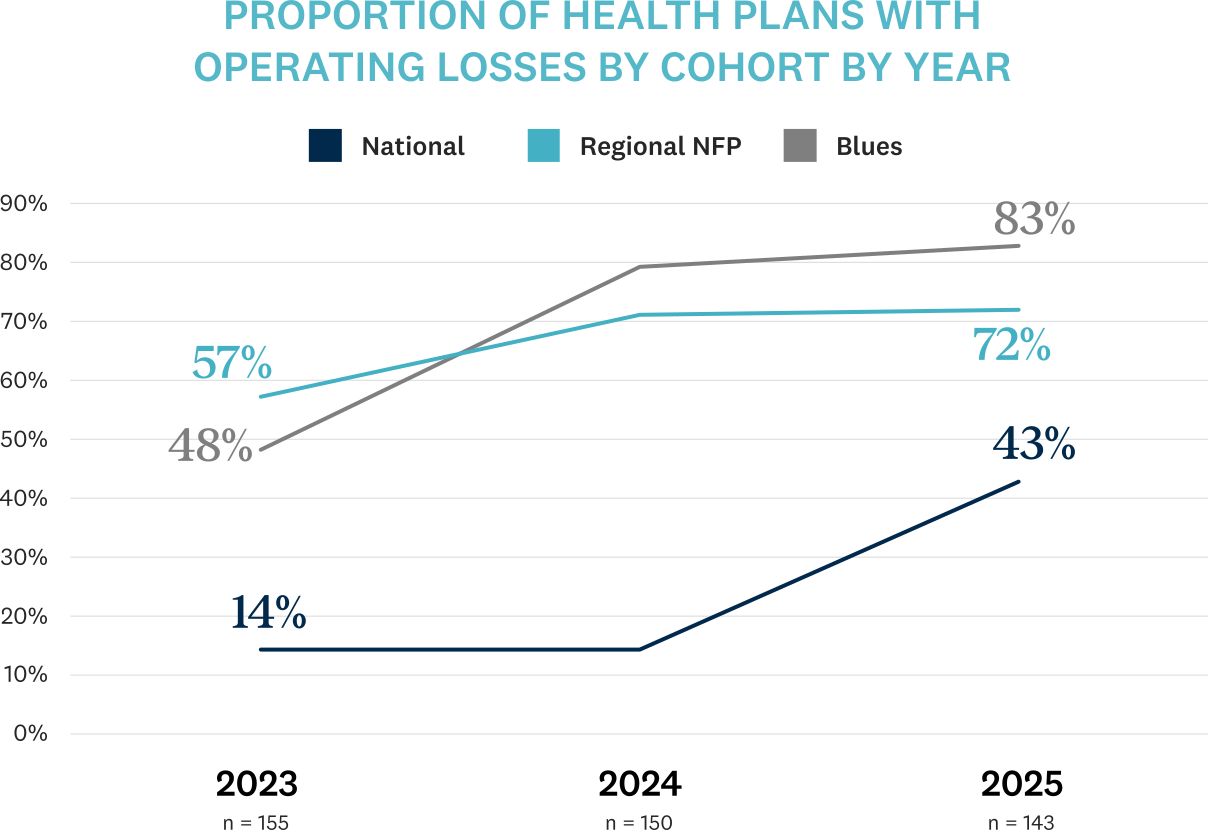
Operating losses are most common among regional and Blues plans, but national plans are not immune
The sustained and growing losses in 2025 underscore that health plans’ challenges are not merely cyclical but also structural. Elevated medical costs, shifting government program economics, and growing affordability constraints continue to bear down on health plans of all sizes. More health plans, including some nationals, are experiencing multiyear losses—evidence that the environment has changed.
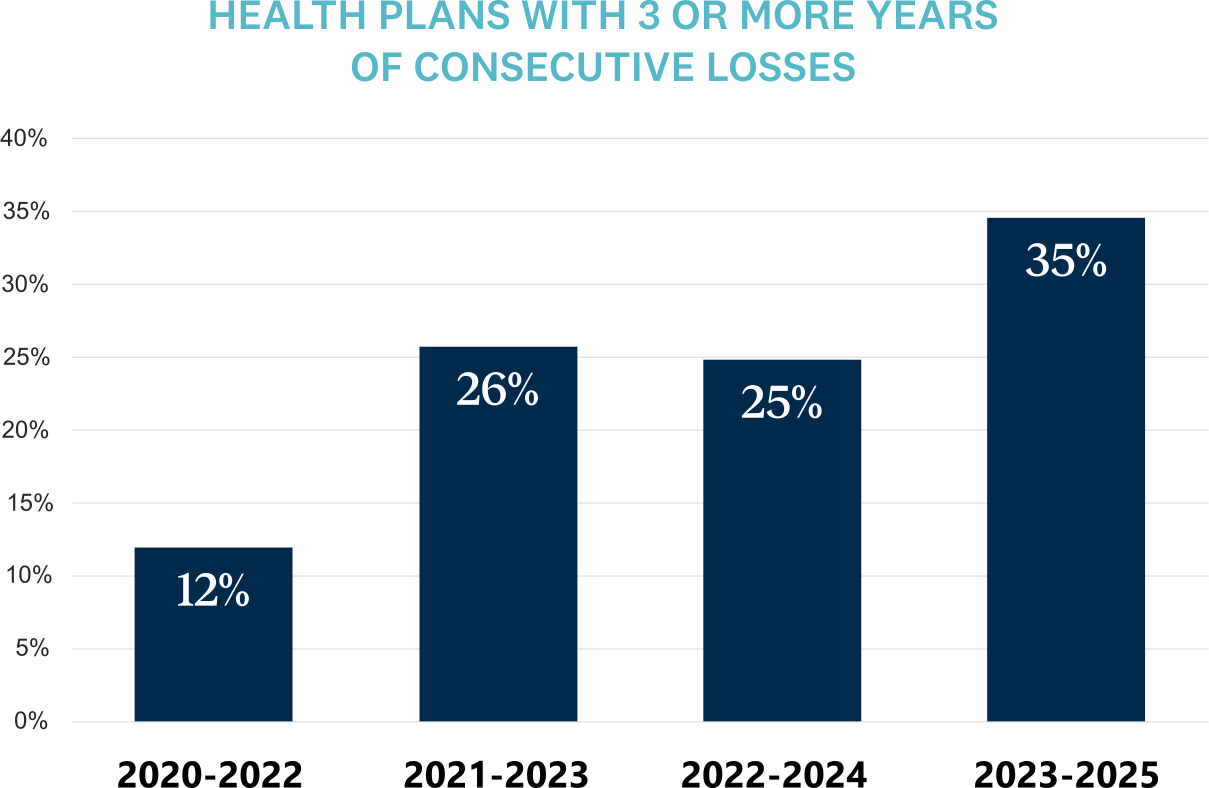
The percentage of health plans reporting 3 or more years of operating losses jumped
The number of health plans with 3 or more years of losses has increased year over year—extending beyond a traditional underwriting cycle.
Many organizations face a structural shift: The operating environment of just a few years ago no longer exists.
Strong revenue growth is no longer sufficient to offset rising medical costs
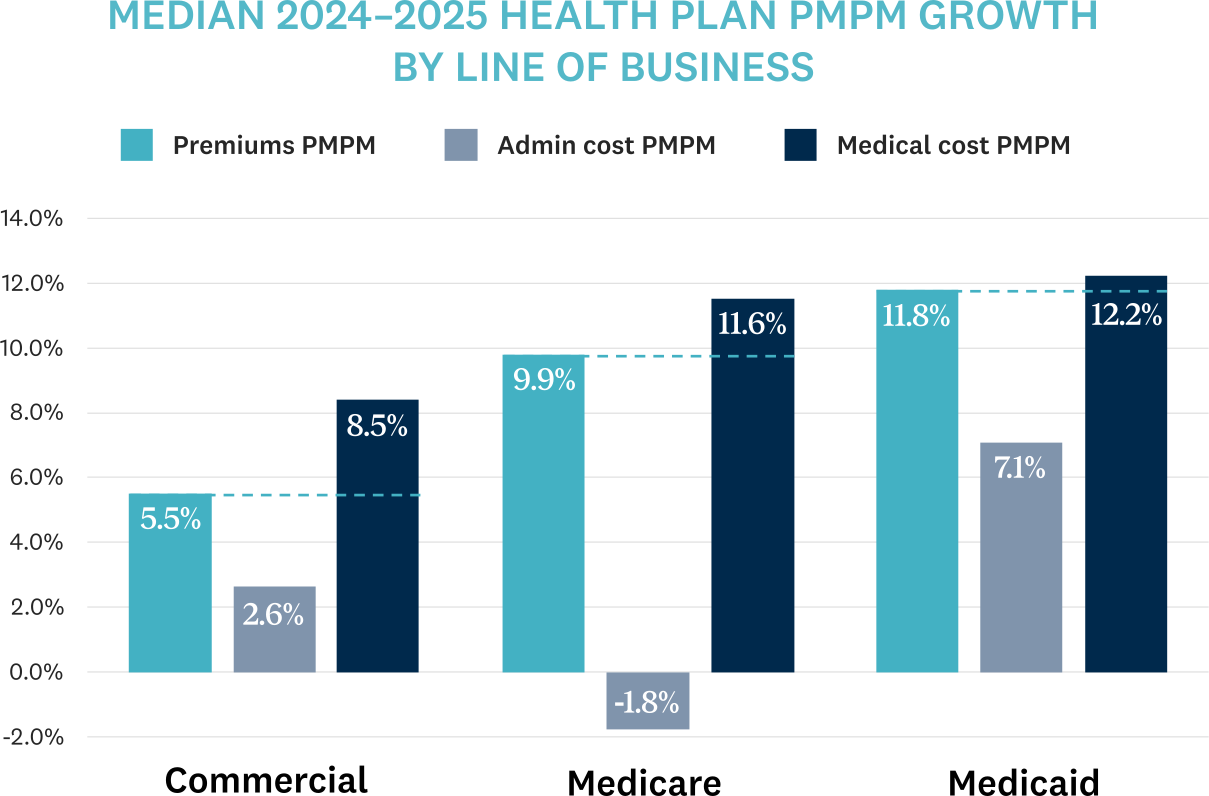
Revenue growth has remained strong across most lines of business on a per-member-per-month (PMPM) basis. This reflects health plans’ substantial pricing actions to keep pace with rising costs over the past several years.
But relying on future rate increases isn’t a long-term solution—especially as employers, individuals, and government purchasers face increasing affordability constraints.
REVENUE GROWTH
Median health plan premiums and costs continued to grow from 2024 to 2025
Administrative expenses are often cited as a primary cause of financial underperformance. The data suggests a more nuanced reality: Except for Medicaid (where enrollment losses are increasing fixed-cost burden at 7% year over year), administrative expenses appear relatively stable.
Medical costs, however, have been far from stable. Medical cost growth was significant across every health plan cohort and line of business. It remains the primary challenge facing health plans. Several factors contribute to this growth:
Continued increases in outpatient utilization and outpatient facility spending
Escalating specialty pharmacy costs, including GLP-1 therapies
Provider consolidation and increasing market power among health systems
Higher-acuity utilization across multiple lines of business
Many health plans have increased revenue in recent years, but medical cost growth has consumed those gains. Increasingly, the defining difference between financially resilient and vulnerable organizations is not their ability to grow revenue but their ability to influence medical trend. Organizations that effectively manage medical trend preserve the capital needed to continue investing, strengthen their competitive position, and expand strategic options. Those that cannot face progressively more constrained choices.
Government lines of business will see additional financial pressures Financially vulnerable health plans are more likely to have a greater exposure to underperforming Medicare Advantage products and Medicaid market uncertainty.
In addition to fixed-cost burdens, Medicaid-focused organizations face enrollment contraction as coverage changes from the One Big Beautiful Bill Act (OBBBA) take effect. Related challenges will squeeze margin further, including: deterioration in the remaining risk pool as healthier members lose coverage, administrative cost growth associated with eligibility and compliance requirements, and downward pressure on Medicaid rates and provider payment levels.
CAPITAL STRENGTH
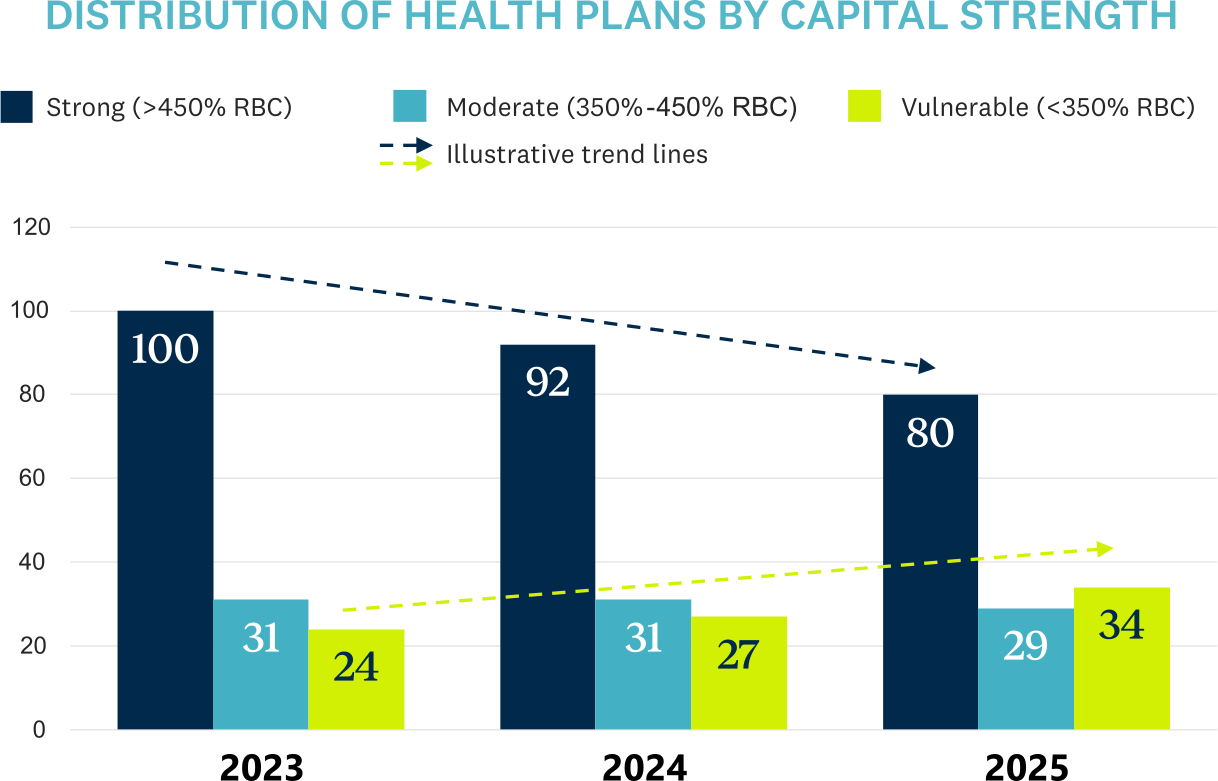
Capital strength continues to erode across the industry
The distribution of capital strength has shifted materially. Fewer health plans have strong capital positions, while increasing numbers of health plans have constrained ones.
Health plans with strong capital positions do continue to face significant financial challenges: 71% reported losses in 2025. But their capital has given them a greater capacity to absorb volatility, invest in capabilities that influence medical trend, and adapt to changing market conditions.
Leading organizations are responding to this reality by strengthening their balance sheets. For example, United, Elevance, and Highmark Health recently increased reserves and expanded reinsurance arrangements to help protect against the volatility they now expect to be the norm.1
Health plans with constrained capital have limited options and an increased likelihood of difficult strategic decisions. Our analysis found that approximately one-quarter of health plans with vulnerable financial positions announced affiliations, acquisitions, partnerships, or market exits in 2024-2025. The pace of these activities is likely to continue.
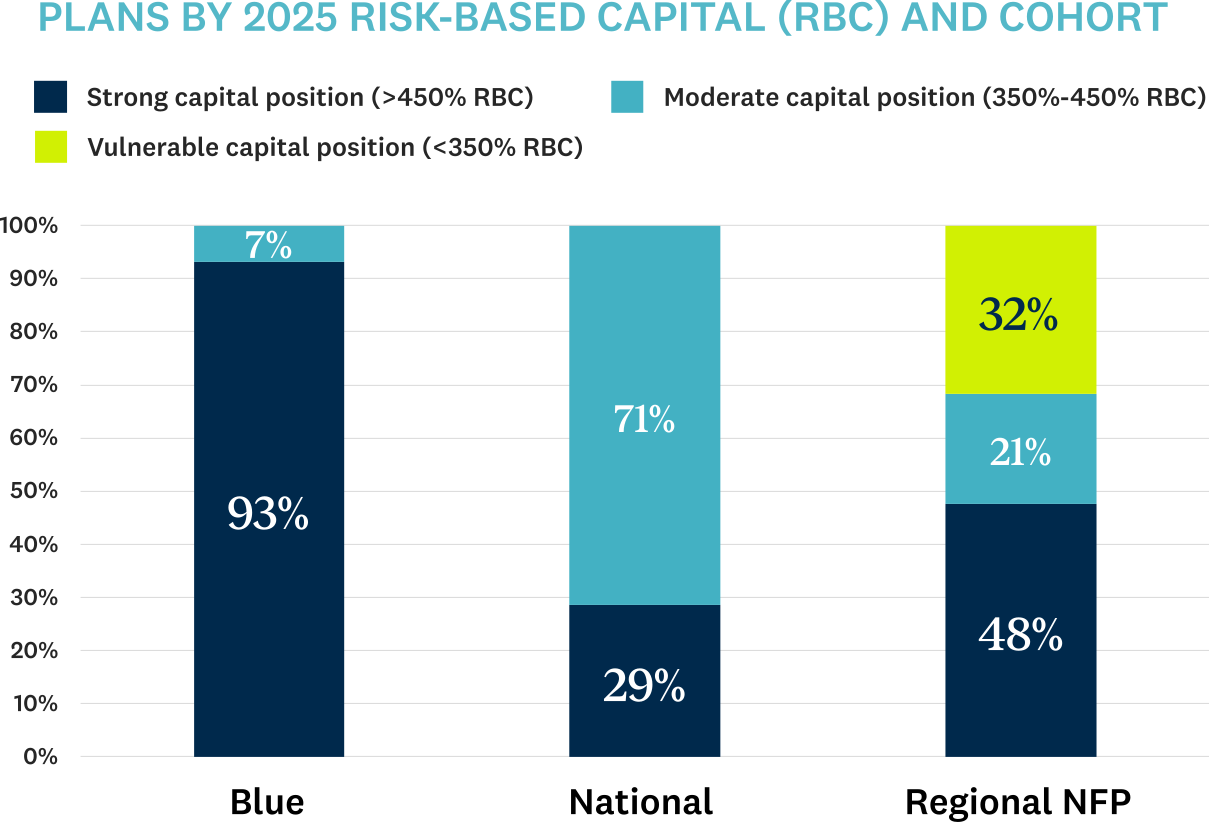
Capital strength by cohort reveals meaningful variations among health plans
Capital positions have weakened across every health plan cohort over the past several years. However, organizations entered this period from different starting points, resulting in meaningful differences in financial flexibility today. As financial pressure has persisted, the gap between financially resilient and vulnerable organizations has become increasingly pronounced:
Blues plans remain the most likely to have a strong capital position, reflecting historically higher capitalization standards relative to regulatory minimums.
Nationals generally maintain lower risk-based capital (RBC) ratios than Blues but benefit from diversified earnings and greater access to capital markets, providing financial flexibility beyond statutory capital alone.
Regional not-for-profit health plans exhibit the greatest variation in capital strength, ranging from some in line with the industry’s strongest balance sheets to a disproportionate share of capital-constrained organizations.
Observed differences between health plans with strong and vulnerable capital positions
Multiple factors shape financial resilience, including operating performance, medical trend management, strategic discipline, and capital strength. Some organizations entered this period with stronger financial flexibility, while others did not. Organizations with stronger capital positions consistently exhibited lower medical cost growth, fewer sustained losses, and stronger overall financial performance.
Metric
Strong capital position (>450% RBC)
Vulnerable capital position (<350% RBC)
Median annual medical expense PMPM growth
9.4%
11.6%
Median operating margin
-2.3%
-3.9%
% with operating losses
71%
88%
% with 3+ years of losses
34%
50%
Median annual revenue PMPM growth
8.5%
9.4%
Median annual membership growth
-0.2%
-0.5%
Three strategic priorities for building health plan resilience
The path to sustainability requires a multi-dimensional approach.
Health plan leaders should focus on the following three priorities.
1. Treat capital as a strategic asset
Capital increasingly determines which organizations can invest their way into the next era of healthcare.
Capital’s greatest value is not simply absorbing volatility. It enables sustained investment in the capabilities that influence medical trend while providing the flexibility to reposition product portfolios, exit underperforming businesses, and pursue strategic opportunities from a position of strength.
Organizations with strong capital can continue investing through market cycles in essential capabilities, including provider partnerships, specialty pharmacy management, care management, analytics, and artificial intelligence (AI).
Organizations with constrained capital often have fewer alternatives, limiting their ability to invest precisely when new capabilities are needed most. While organizations with strong capital should deploy it deliberately to strengthen long-term competitive advantage, organizations with constrained capital should prioritize preserving financial flexibility. They should concentrate investments on the highest-return opportunities and evaluate partnerships, affiliations, or portfolio actions that expand strategic flexibility.
Capital allocation decisions should be guided by three principles:
Develop a disciplined capital allocation framework that prioritizes investments based on strategic and financial return. Evaluate product portfolios, growth initiatives, technology investments, provider partnerships, and acquisitions using consistent investment criteria.
Make deliberate portfolio decisions that preserve capital. Redirect investment toward businesses and capabilities with sustainable returns. Simultaneously consider product exits, geographic rationalization, shared-services models, partnerships, or affiliations where the economics no longer support long-term financial sustainability.
Apply the same investment discipline to AI as any major capital decision. AI should compete for capital alongside every other strategic investment. While the technology offers significant long-term potential, many organizations are still working to establish a clear path from today’s investments to measurable enterprise value. The challenge is compounded by the need to fund AI initiatives while continuing to support legacy platforms, technical debt, and existing operating models.
Health plans should consider using early AI investments to prove the economics of transformation, prioritizing use cases that strengthen medical management, improve member engagement and navigation, and influence total cost of care before expanding to broader enterprise deployment.
2. Actively manage the drivers of medical cost trend
Regardless of financial position, health plans should prioritize initiatives that directly influence the largest contributors to medical cost growth. Organizations that consistently outperform do not rely on isolated cost-containment programs. They build coordinated capabilities that influence medical trend across multiple dimensions of the business.
Health plan leaders should focus on five capabilities:
Population health: Shift from broad-based programs to targeted, data-driven interventions focused on members with the greatest opportunity to improve outcomes and reduce avoidable costs.
Utilization management: Modernize utilization management by using analytics, evidence-based policies, and streamlined processes to reduce unnecessary care while maintaining quality and the member experience.
Provider performance: Strengthen provider incentives, performance measurement, and site-of-care strategies to improve value and reduce unwarranted variation in utilization and cost.
Pharmacy management: Treat pharmacy as a strategic component of total cost of care through specialty pharmacy management, formulary optimization, and appropriate use of high-cost therapies.
Payment integrity: Reduce avoidable cost leakage by addressing upstream operational, coding, and claims issues while maintaining productive provider relationships.
Sustainable financial performance will depend on an organization’s ability to coordinate these capabilities as part of a comprehensive medical trend strategy rather than as standalone initiatives. Increasingly, advanced analytics and AI will enable organizations to execute these capabilities more effectively by improving decision-making, personalizing interventions, optimizing resource deployment, and strengthening their ability to influence medical trend at scale.
3. Shape a more constructive provider strategy
Provider relationships represent one of the most important levers health plans possess to influence medical cost trend.
Many payer-provider relationships consist primarily of transactional activities, such as contract negotiations, payment disputes, prior authorization, coding reviews, and appeals. These functions remain essential but do little to influence long-term medical trend.
Future success will require moving beyond a network strategy to a broader provider strategy that strengthens alignment with affiliated, contracted, and community providers.
Health plans that are cultivating provider alignment are creating additional opportunities to influence utilization, site-of-care decisions, and total cost of care. Their associated investments in capabilities for data sharing, collaborative performance measurement, incentive structures, operating models, and joint ventures have allowed them to work with providers to influence medical trend.
Such partnerships can improve payment accuracy while enabling both organizations to focus greater attention on utilization management, care delivery, and total cost of care. This can also allow the participating organizations to better deliver their missions by improving affordability, quality, and member outcomes.
Organizations best positioned for long-term success will evaluate provider partnerships by their ability to influence medical trend, not simply to negotiate contracts.
Reposition for resilience
The health plan industry is entering a period of greater separation between financially resilient and financially vulnerable organizations.
Financial resilience is built over time. Organizations that consistently manage medical trend, make disciplined capital allocation decisions, exercise strategic selectivity in where they compete, and invest in capabilities that strengthen long-term performance are better positioned to preserve capital, adapt to market pressures, and continue investing as conditions evolve. Those investments, in turn, reinforce future financial performance and expand strategic flexibility.
The organizations best positioned for long-term success will not treat capital allocation, medical trend management, and provider alignment as separate priorities. They will manage them as interconnected capabilities that reinforce one another and strengthen long-term financial resilience.
Additional contributors: Carson Greenlee, Analyst; Jack McGranahan, Consultant; Jeff Keegan, Associate Partner; and Scott Sullivan, Associate Consultant
Methodology
HealthScape’s analysis is based primarily on statutory financial filings submitted to the National Association of Insurance Commissioners (NAIC). While these filings provide the most comprehensive and standardized source of health plan financial data available, they do not capture every organization in the market, including certain California-regulated HMOs, Taft-Hartley plans, and other entities that do not report to the NAIC.
Unless otherwise noted, results are presented using median values rather than averages. The study population consists of parent organizations rather than individual legal entities. Accordingly, affiliated organizations operating under common ownership, such as Independence Blue Cross and AmeriHealth Caritas, are evaluated as a single organization because they share a consolidated strategic and capital structure.
The composition of the study population may vary modestly from year to year as organizations merge, restructure, enter, or exit the market and as inclusion criteria are applied. We analyzed national publicly traded companies (Aetna, Centene, Cigna, Elevance, Humana, Molina, and United), Blues, and regional not-for-profit health plans. Other for-profit health plans, such as Oscar, Alignment, and Clover, were excluded because they represent approximately 3% of total membership.
We use operating margin rather than underwriting margin because it captures the full financial performance of a health plan, including both insurance operations and investment income.
Health plans are entering a defining period. As they grapple with unprecedented operational pressures, their actions now will determine how they will compete in a fundamentally different environment.
Regional not-for-profit health plans face mounting losses and limited runway. Our analysis shows leaders must act now by pursuing bold turnarounds, mergers, or affiliations to secure their future.
Our 2026 Medicare Advantage competitive enrollment report analyzes trends that depict a market reset. We discuss five key takeaways and actions for health plans.