The Medicare Advantage market is resetting under a new set of economic and market realities. 2026 enrollment results show that growth has not disappeared, but it has become considerably more concentrated among certain organizations and market segments as health plans make strategic decisions about this line of business.
Most for-profit health plans publicly forecasted their intent to slow growth or even scale back membership to prioritize margin. This renewed focus on sustainability led some health plans to exit the Medicare Advantage market entirely, reduce their geographic footprint, and/or dampen benefits. The result was a redistribution of enrollment, with growth accruing to a few health plans, primarily Special Needs Plans (SNPs).
In the next year, additional health plans will likely exit or retrench, particularly given lower-than-expected rate increases. But the long-term outlook remains positive as the senior demographic continues to grow, Medicare Advantage stays an attractive product choice, and headwinds impact other lines of business.
In the next chapter of Medicare Advantage, successful health plans will balance competitive positioning with financial discipline and ultimately transform the line of business to ensure sustainability.
Our analysis reveals the following changes shaping the Medicare Advantage market:
Table of contents
Analysis: Current Medicare Advantage market share and enrollment
Medicare Advantage growth cooled materially: Enrollment rose just 2.5%—down from 3.6% in 2025, signaling a more constrained growth environment.
Growth was concentrated among fewer players: Humana and a small set of growth-focused plans captured most net gains amid pullbacks by United and Aetna.
SNPs continue to power the market: SNP enrollment jumped 12.2%, led by explosive CSNP growth (+49%). Emerging plans like Devoted, CareSource, and Molina are beginning to chip away at incumbent dominance.
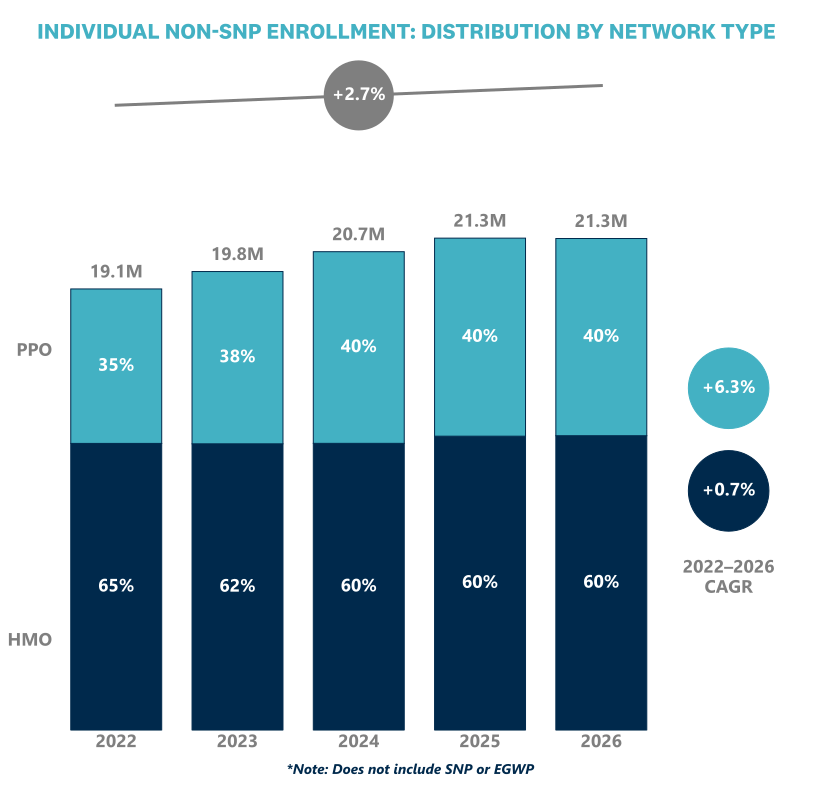
Plan choice keeps shrinking, but member preference remains consistent: Total plan offerings fell 2.5% for the third straight year—driven by cuts to non-SNPs and a 10% drop in PPOs—yet enrollment distribution across network types remained remarkably stable.
Health plans are pivoting to control costs: As benefit richness erodes, carriers are increasingly favoring HMOs to better manage utilization.
Quality pressure is mounting: While average star ratings held steady, only 67% of members are now enrolled in plans of 4+ stars, down sharply from roughly 80% earlier in the decade.
Financial strain is forcing retrenchment: Several health plans exited Medicare Advantage entirely, while major incumbents significantly reduced their footprints.
Disruption created openings for growth oriented players: Displaced members flowed to competitors, allowing startups like Alignment, Devoted, and Clover to gain share.
Executives are shifting strategy, not abandoning the market: Despite growing questions about ongoing viability, most leaders are focused on disciplined retrenchment and operational fundamentals to build long-term sustainability.
Analysis: Current Medicare Advantage market share and enrollment
Growth continues to decelerate, but member migration between health plans is high
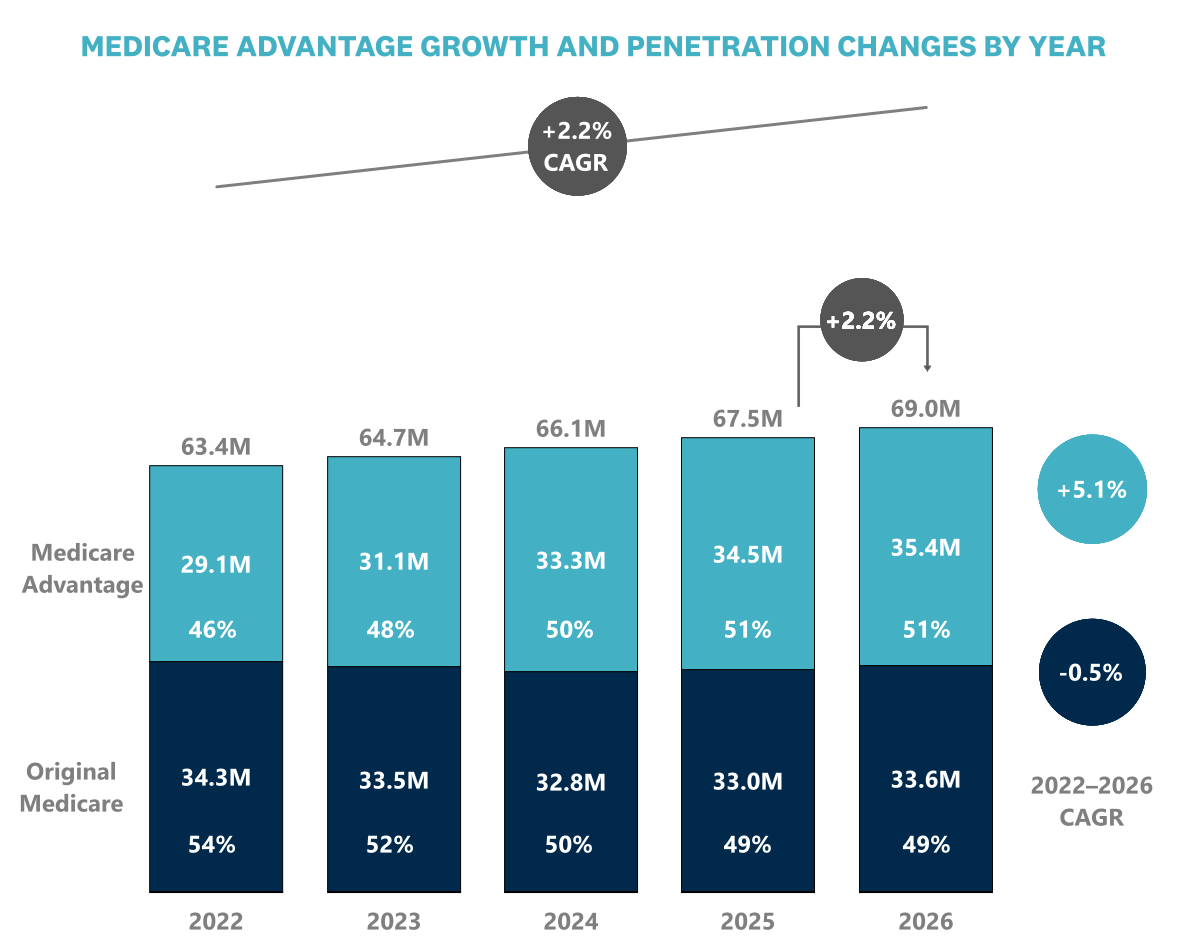
Medicare Advantage enrollment grew to a record 35.4 million, despite significant market headwinds
51% of the Medicare population now is enrolled in a Medicare Advantage plan. This reflects growth of nearly 900,000 total beneficiaries (+2.5%) since 2025, bringing enrollment to 35.4 million beneficiaries out of 69 million Medicare-eligible individuals.
This year’s 2.5% growth is again well below the historic 7% to 10% annual growth rates seen in the early 2020s. However, it represents only a slight decrease compared to 2025, when enrollment grew by 3.6%.
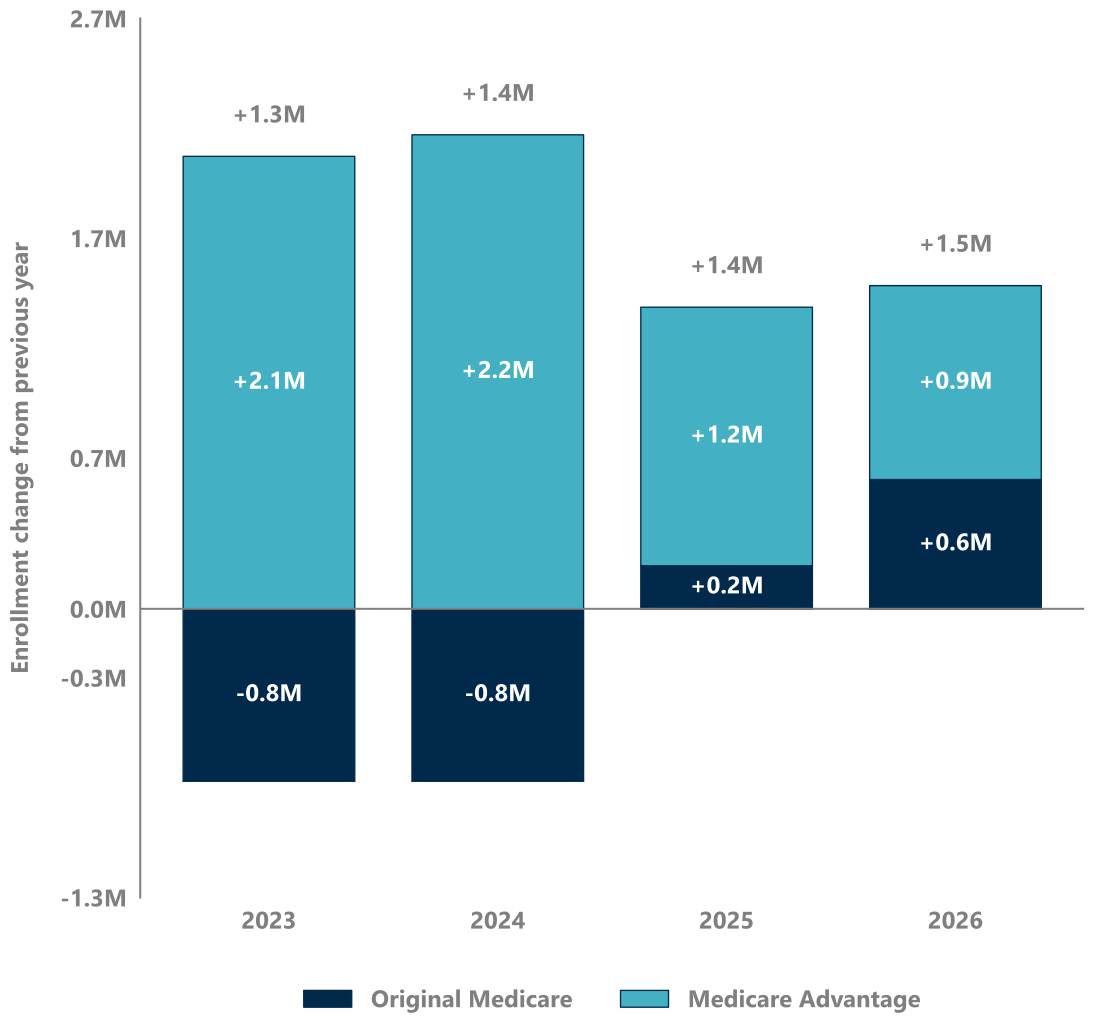
Medicare Advantage is no longer growing at the expense of Original Medicare
This year was the second highest for overall Medicare program growth over the past 5 years, with 1.5 million new beneficiaries added to the program across both Medicare Advantage and Original Medicare. Consistent with the analysis in our 2025 Medicare Advantage Enrollment Report, we expect this plan year to coincide with one of the highest age-in influxes, attributed to the Baby Boomer generation. This cohort will continue entering Medicare through the end of the decade.
For years, Original Medicare enrollment has declined in favor of Medicare Advantage. However, Original Medicare enrollment increased by 600,000 beneficiaries this year.
While not shown explicitly in the chart, enrollment in standalone prescription drug plans (PDPs) increased by 1.7 million members this year as fewer seniors opted for Medicare Advantage but still desired prescription drug coverage.
ANNUAL ENROLLMENT GROWTH DIFFERENCES BETWEEN ORIGINAL MEDICARE AND MEDICARE ADVANTAGE
Medicare Advantage enrollment has declined for the first time in several states
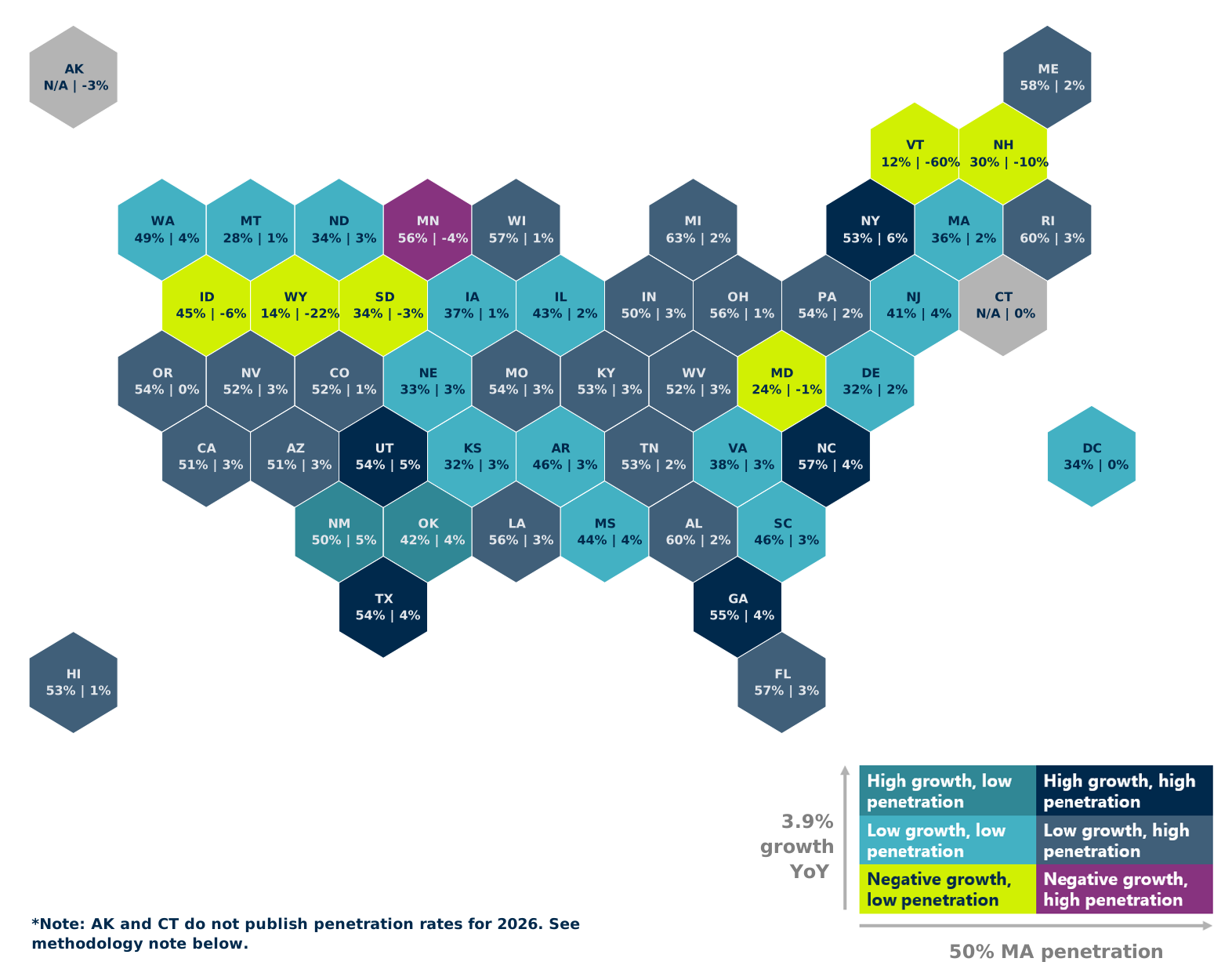
A state’s penetration rates and Medicare Advantage enrollment growth rate are two key metrics that provide insight into the state’s Medicare Advantage market maturity. In 26 states, more than half of Medicare enrollment is in a Medicare Advantage plan. While under-penetrated states typically see higher growth rates, several states experienced Medicare Advantage enrollment declines for the first time—including Vermont, Wyoming, New Hampshire, Idaho, Minnesota, Maryland, and South Dakota.
This declining Medicare Advantage enrollment in select states appears to be primarily the result of health plan exits from those markets versus a change in consumer preference. For example, Blue Cross Vermont exited Vermont, leaving no individual Medicare Advantage plans available in the state. Additionally, United and Aetna significantly retreated from the Maryland market, forcing beneficiaries to select other plans or switch to Original Medicare.
New York was the only state to experience greater than 5% Medicare Advantage enrollment growth.
2026 MEDICARE ADVANTAGE PENETRATION AND YOY ENROLLMENT GROWTH BY STATE
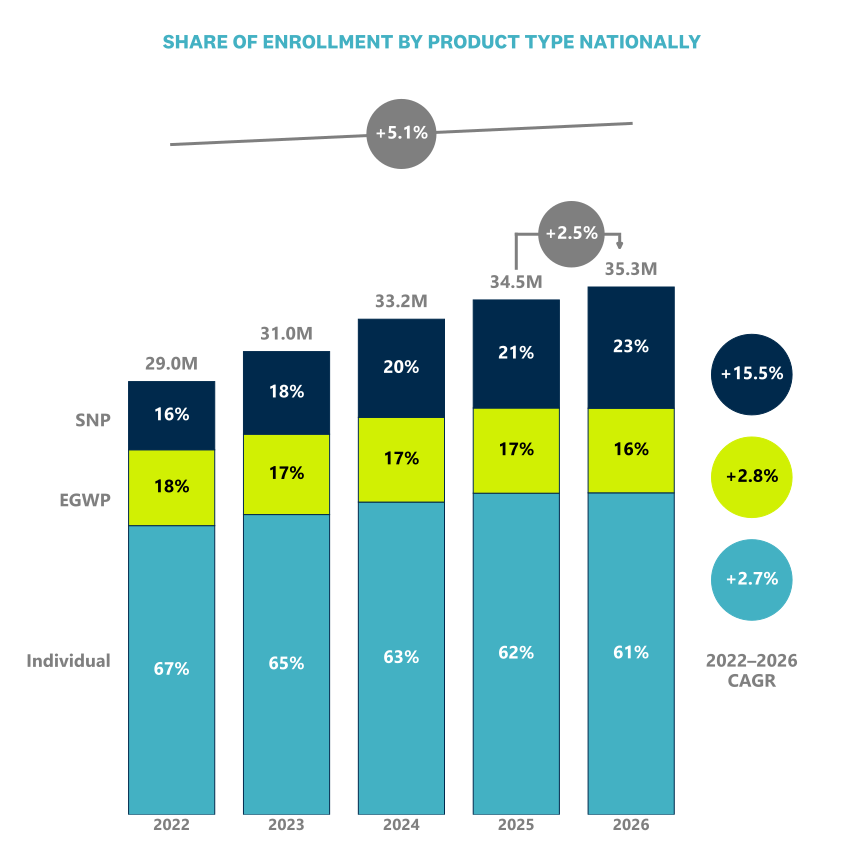
SNP enrollment growth continues to outpace individual Medicare Advantage, driven by C-SNPs
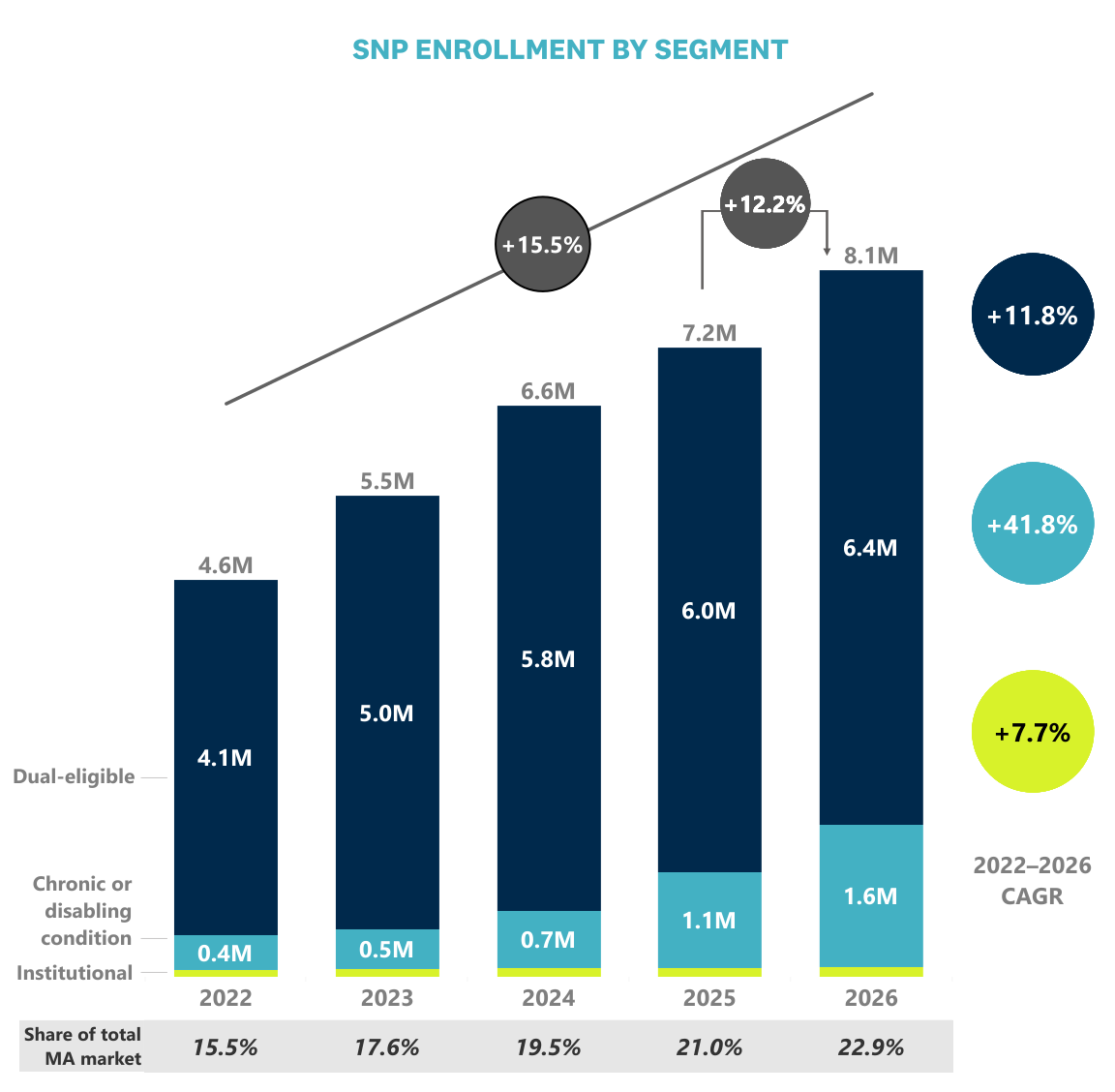
In 2026, 23% of Medicare Advantage enrollees have coverage through a SNP—enrollment in the segment grew by 883,000 members. This enrollment increase of 12.2% accelerated from the previous year’s growth rate of 10.1%. This reinforces the segment’s importance to the Medicare Advantage sector and the imperative for health plans to serve this large and high-growth population.
Three-quarters of SNP enrollees are in D-SNPs, and C-SNP enrollment continues to surge
Within the SNP segment, Dual-Eligible SNPs (D-SNPs) remain the prominent SNP type, accounting for 78% of the SNP market. D-SNP growth ticked up marginally compared to last year, adding 344,000 members (5.7%). This is an increase in growth relative to 219,000 members (3.8%) added last year.
Enrollment in C-SNPs continued to surge—a staggering 49%, from 1.1 million to 1.6 million. While the sharp rise in C-SNP growth indicates the attractiveness of this sub-market, appropriately investing in the infrastructure required to effectively manage this chronically ill population will become increasingly critical for health plans.
Institutional SNP (I-SNP) enrollment also climbed marginally (7.7%), yet well behind the rate of the overall SNP market.
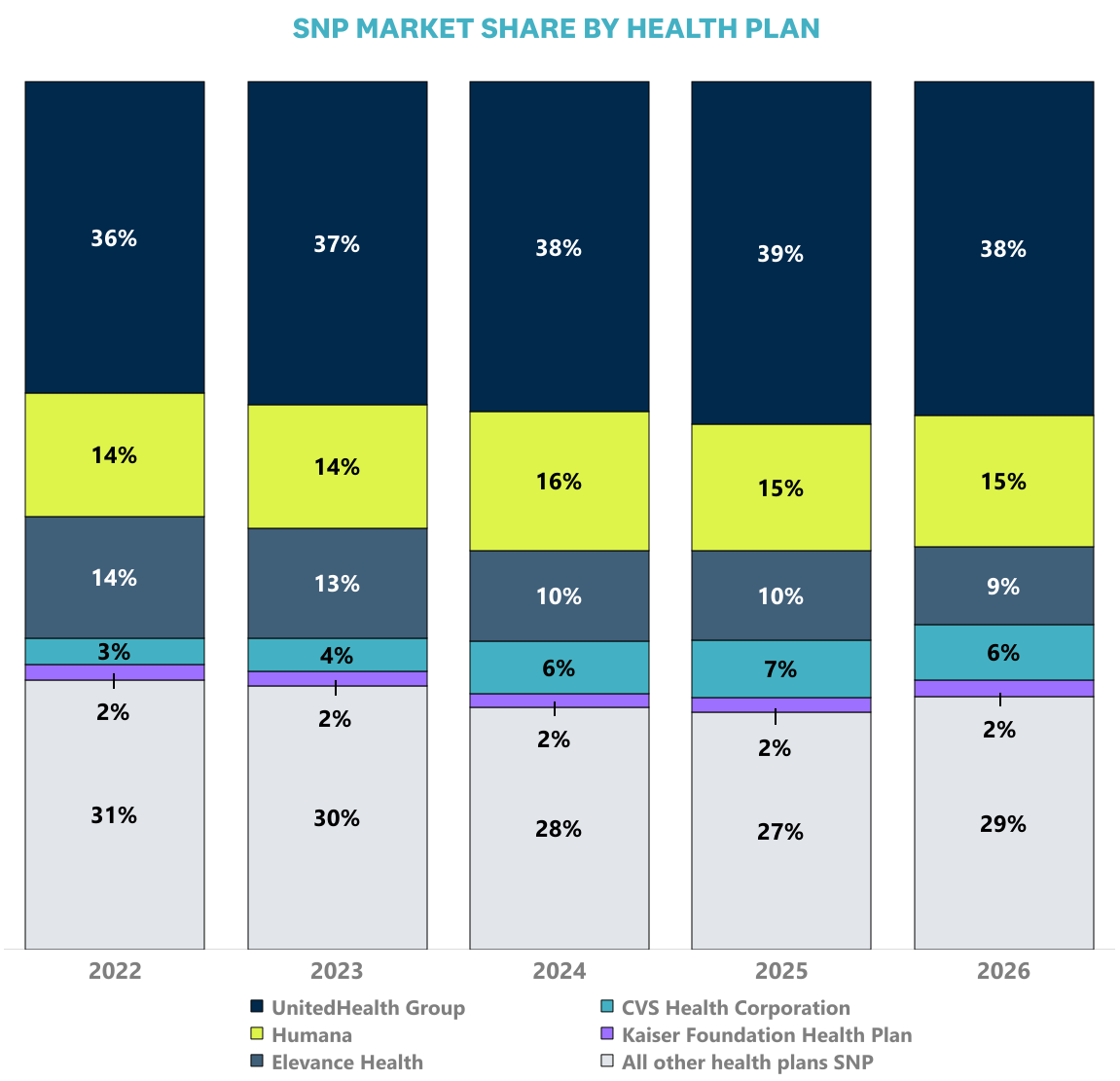
Top five health plans cover 71% of SNP enrollees, but smaller health plans are gaining ground
SNP growth is again accreting to the top five health plans, which collectively represent 71% of the market. However, this number is modestly down from 73% last year, indicating that smaller plans are gaining ground and presence in this market. Of note, Humana’s share of the SNP market has rebounded to just above 15%, while the other for-profits decreased in market share or remained relatively unchanged.
C-SNP growth largely accrued to Humana (+53%), United (+38%), and Elevance (+12%). Within the SNP product lines, these three health plans make up nearly 76% of the C-SNP market. Aetna and Devoted also grew their C-SNP portfolios exponentially compared to their 2026 membership at 26 times and 17 times their 2025 membership, respectively.
Biggest trends and changes from previous year
Plan options for consumers declined again
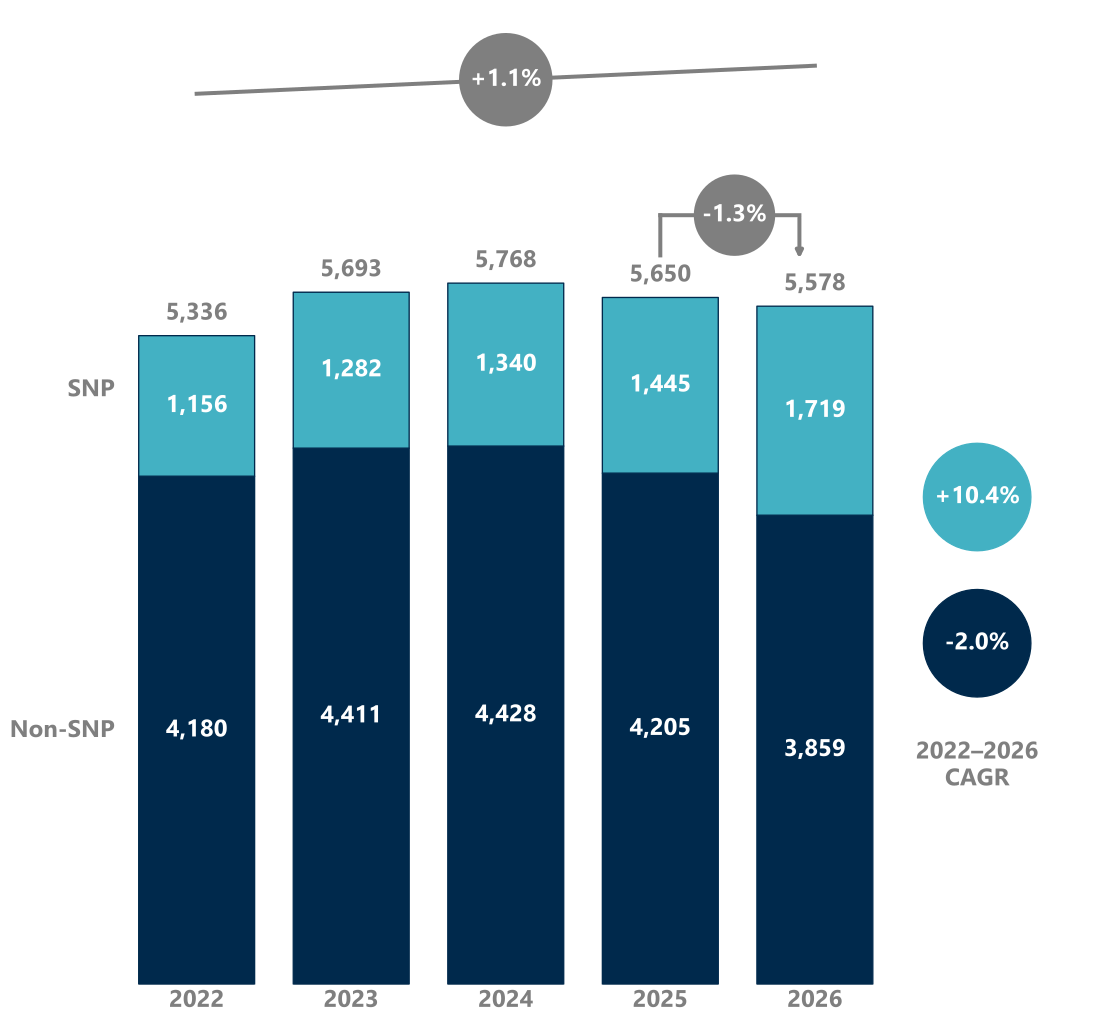
A noteworthy trend in recent years has been the overwhelming number of Medicare Advantage plans available to seniors. For the second consecutive year, that number has decreased. Across all individual Medicare Advantage products (SNP and non-SNP), 5,578 plans were available in 2026, down 1.3% from last year.
Within this overall decrease, the unique number of non-SNP Medicare Advantage plans fell sharply by 8.6%, while the number of unique SNP options increased by 19.0%. The number of C-SNP plan offerings in particular increased by 47% to 549, up significantly from the 6% increase in 2025. Devoted Health and United offer the most C-SNP plans at 117 and 104, respectively, while Humana offers the third most at 76.
TOTAL NUMBER OF UNIQUE NON-EGWP PLAN OPTIONS AVAILABLE
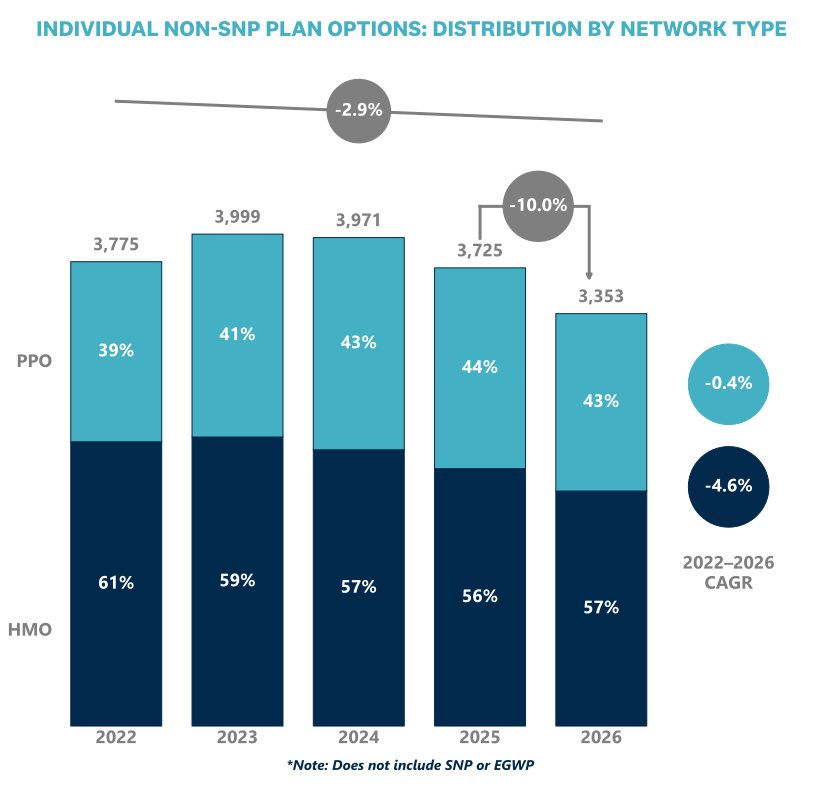
Despite health plan direction toward HMOs, 40% of seniors still prefer PPOs
HMOs still comprise the majority (57%) of plan offerings in the non-SNP Medicare Advantage market. While PPO plan offerings have contracted meaningfully, PPO enrollment has remained stable. Despite health plans’ strategic intent to manage care and medical costs via HMOs, it seems many seniors still prefer PPO plans with broader networks and fewer restrictions than HMO plans.
For-profits continue to dominate the market, despite pull back from United and Aetna
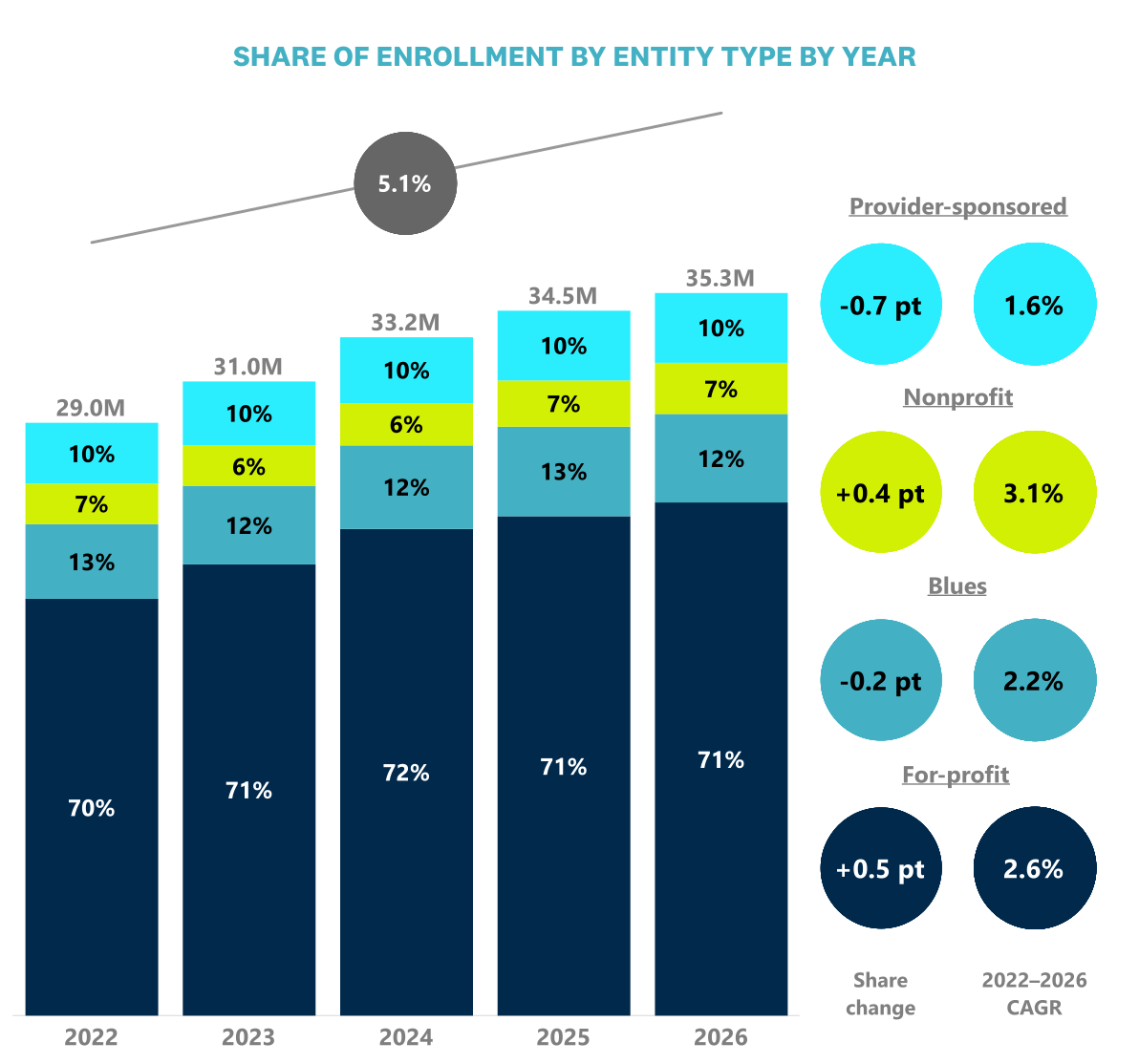
For-profit insurers have dominated the Medicare Advantage market, increasing enrollment and share annually in recent years. They controlled 71% of the market again in 2026. Humana drove nationals’ growth while startups and nonprofits gained market share.
Note: While Elevance operates as a Blues plan, we categorize Elevance as a for-profit plan for the purposes of this report because Elevance trades publicly on the NYSE. This graphic includes individual Medicare Advantage, SNP, and Employer Group Waiver Plans (EGWP) enrollment.
For-profit plans captured enrollment growth while Blues netted loss of membership
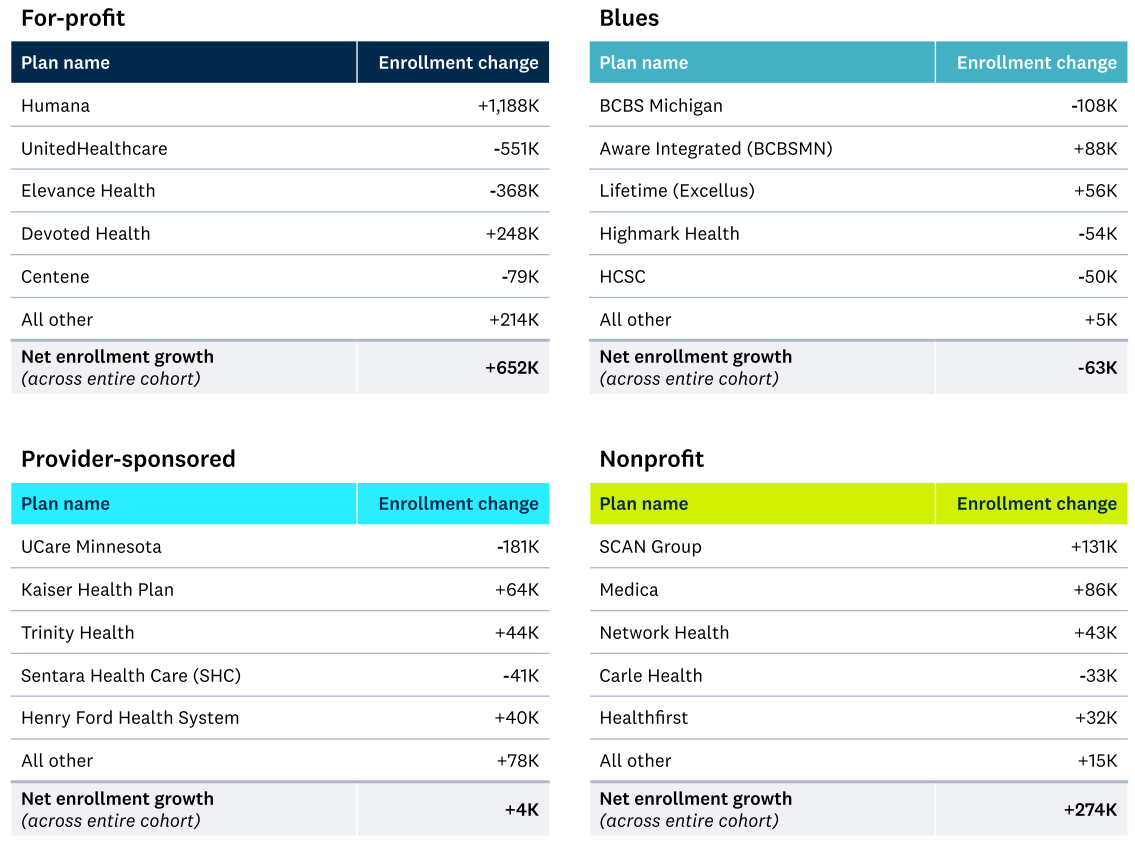
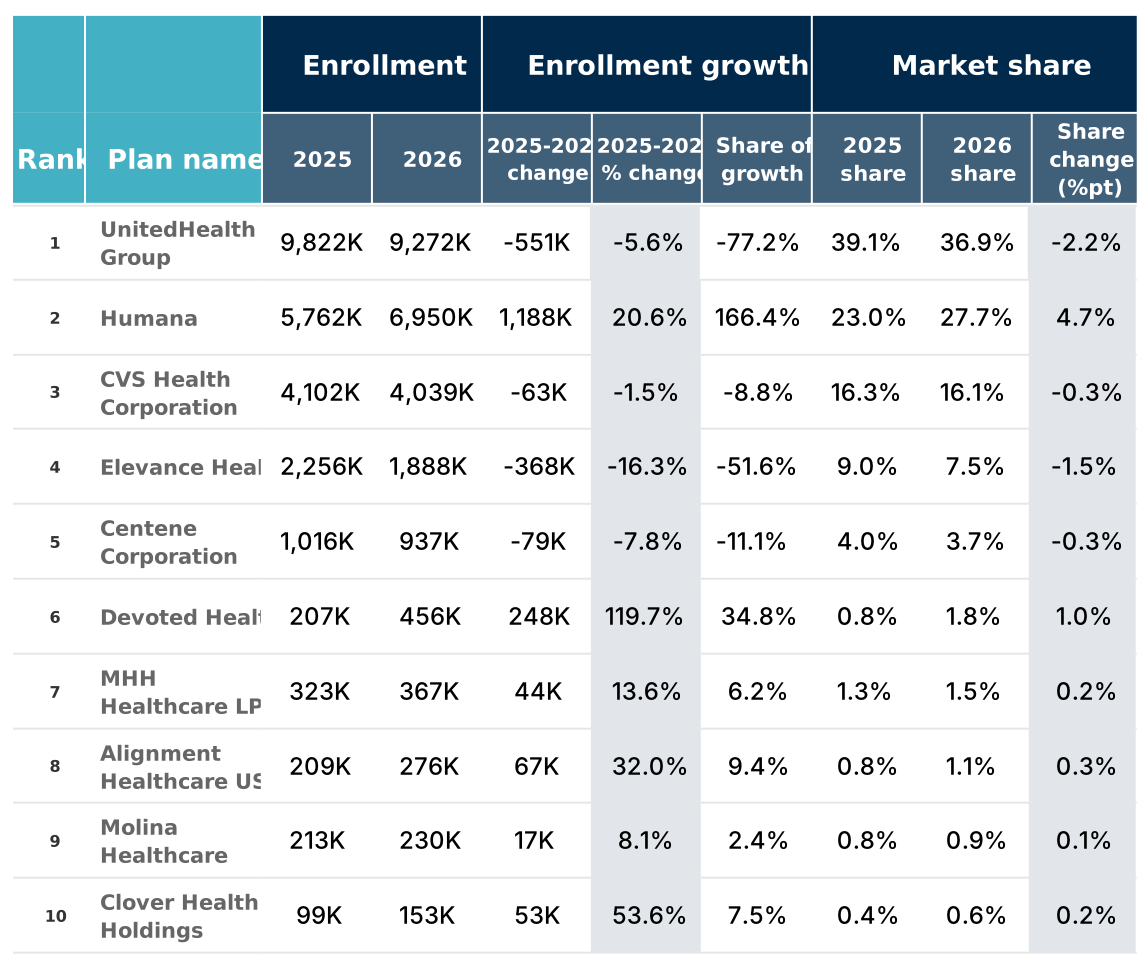
75% of this year’s membership growth accrued to for-profit plans (652,000 members), and 22% accrued to other nonprofit (non-Blue) plans (274,000 members). Humana is the only national for-profit plan that grew in 2026 as other nationals took steps to shed enrollment. Humana membership surged by 1.2 million (21% growth). For-profit startups such as Devoted and Alignment also contributed to the for-profit cohort’s rise in enrollment by 248,000 and 67,000, respectively.
Blue Cross Blue Shield of Michigan experienced the greatest enrollment loss among the Blues, with a 108,000 decline in enrollment (of which 32,000 was due to Blue Cross Vermont’s exit). Regional players such as Highmark and HCSC lost 54,000 and 50,000 lives, respectively.
SCAN grew the most among nonprofits. It added 131,000 members, which accounted for nearly 48% of the nonprofit cohort’s growth.
The provider-sponsored health plan cohort saw major exits, such as UCare, but it posted positive enrollment growth (4,000) led by Kaiser, Trinity (MediGold), and Henry Ford Health.
TOP 5 ABSOLUTE ENROLLMENT CHANGES BY ENTITY TYPE FROM FEBRUARY 2025 TO 2026
ENROLLMENT AND SHARE CHANGES FOR TOP 10 LARGEST FOR-PROFIT HEALTH PLANS
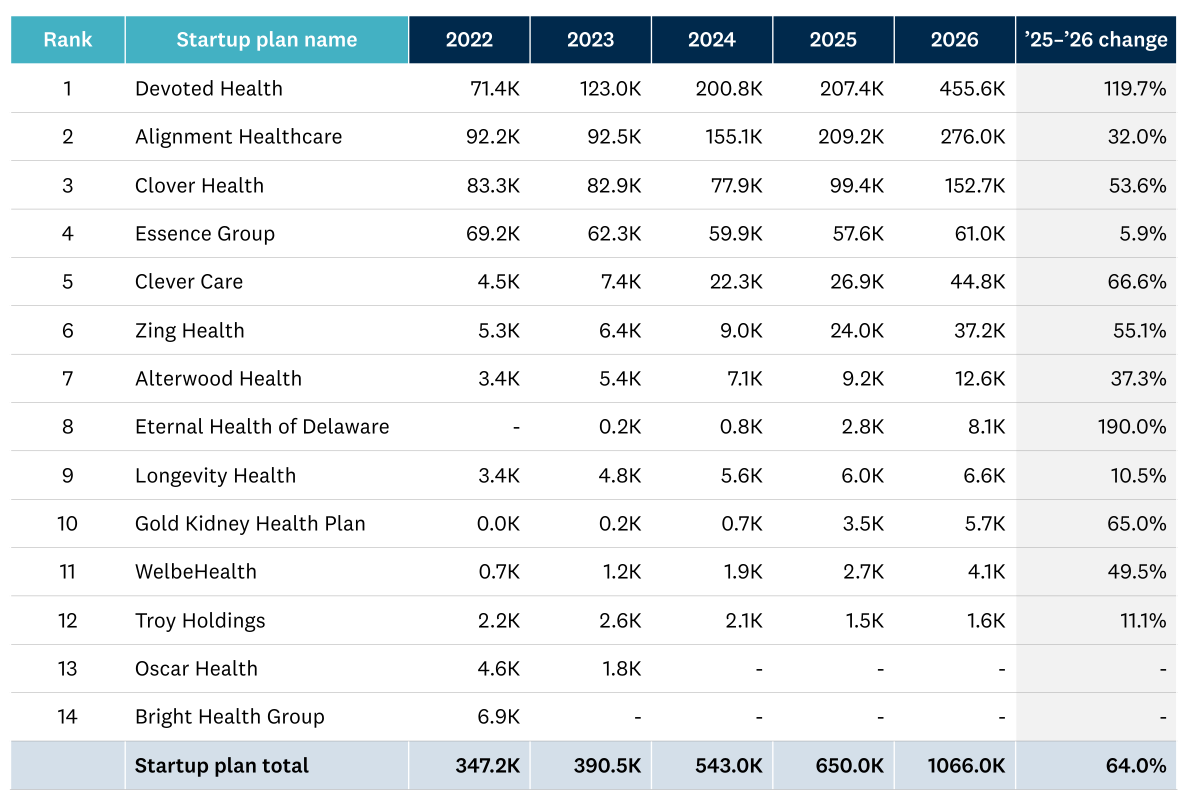
Devoted Health doubles membership, and Alignment and Clover sustain strong growth
Startup plans (or plans that were recently startups) tracked in our index now account for 3% of all Medicare Advantage enrollment nationally, up from 1.9% last year and 1.2% in 2022.
STARTUP PLAN MARKET SHARE
Note: Oscar exited the Medicare Advantage market in 2024, and Bright Health was acquired by Molina, which has since signaled intent to leave the individual Medicare Advantage market.
Devoted led growth in the startup segment, increasing membership by nearly 120%. Alignment Healthcare and Clover Health also significantly increased membership. The top three startups added 370,000 members in total, accounting for more than 90% of the startup cohort’s overall growth of 410,000 members. Zing Health also grew significantly, adding 13,000 members, with 74% of its enrollment in C-SNP.
Quality rating performance remains a pressure point
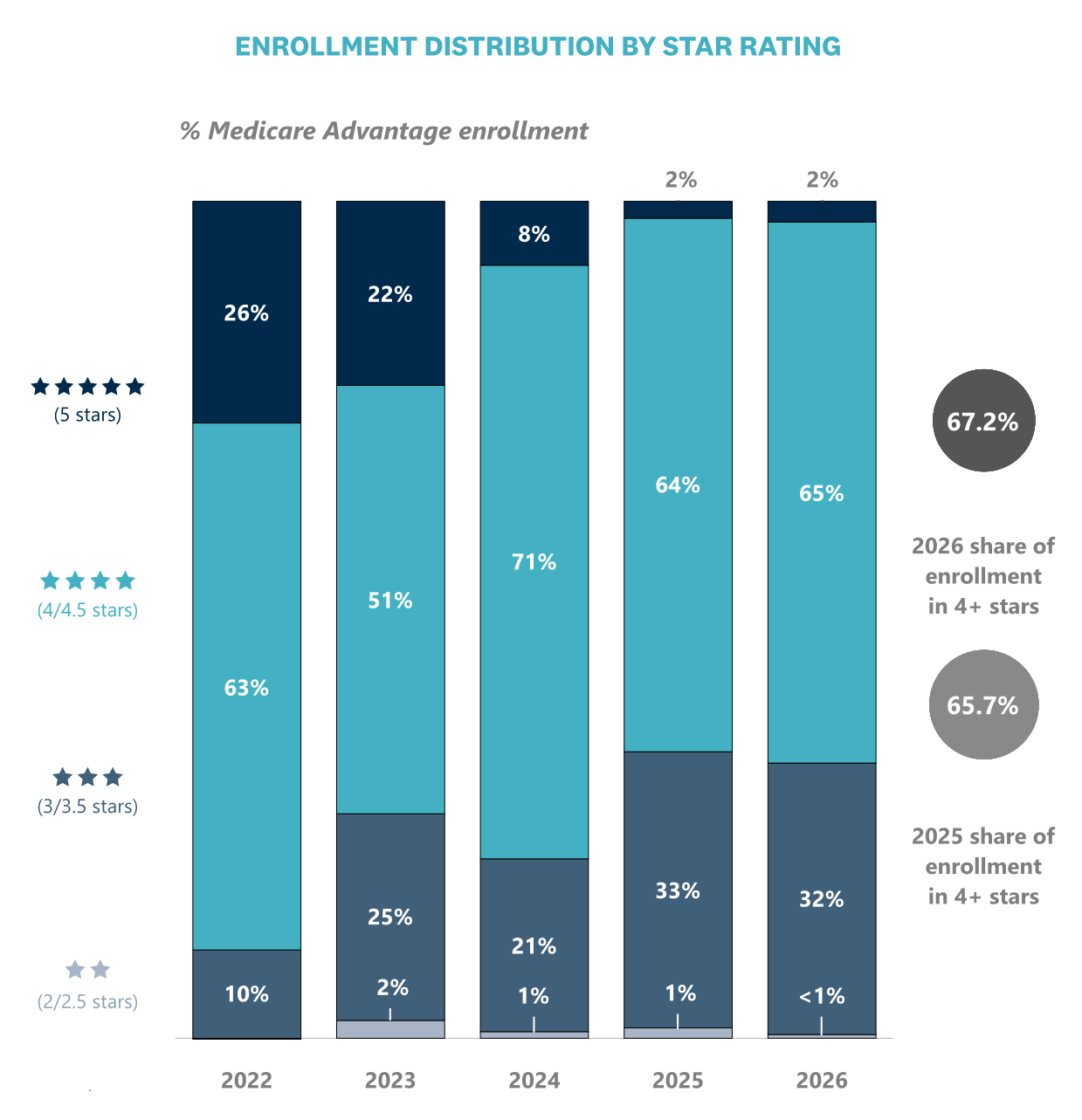
67.2% of all enrollees are now in a plan with 4+ stars, a slight increase from 65.7% last year. Consistent with last year, only 2% of membership is now enrolled in a 5-star plan, down from 8% in 2024. Conversely, 32% of Medicare Advantage enrollees were aligned to plans with fewer than 4 stars, which was only a slight improvement from 2025.
Achieving 4+ stars impacts financial performance and competitiveness. It qualifies health plans for quality bonus payment (QBP) and a greater rebate percentage, allowing the health plans to reinvest in benefits that make products more attractive. This in turn drives membership growth and, when managed effectively, results in better financial performance.
However, with persistent margin pressure and Star Rating underperformance, we expect to see benefits dampen even further in 2027.
Market reactions: How organizations are responding
Medicare Advantage leaders’ growth outlook is mixed—expect further retrenching in the year ahead
We recently surveyed government program leaders to gather perspectives on the Medicare Advantage market, complementing the insights gleaned from enrollment trends and the Medicare Annual Enrollment Period (AEP) disruption analysis. These survey results align with our analytic findings: They depict a market undergoing near-term turbulence yet poised for future opportunity for health plans that can weather the disruption.
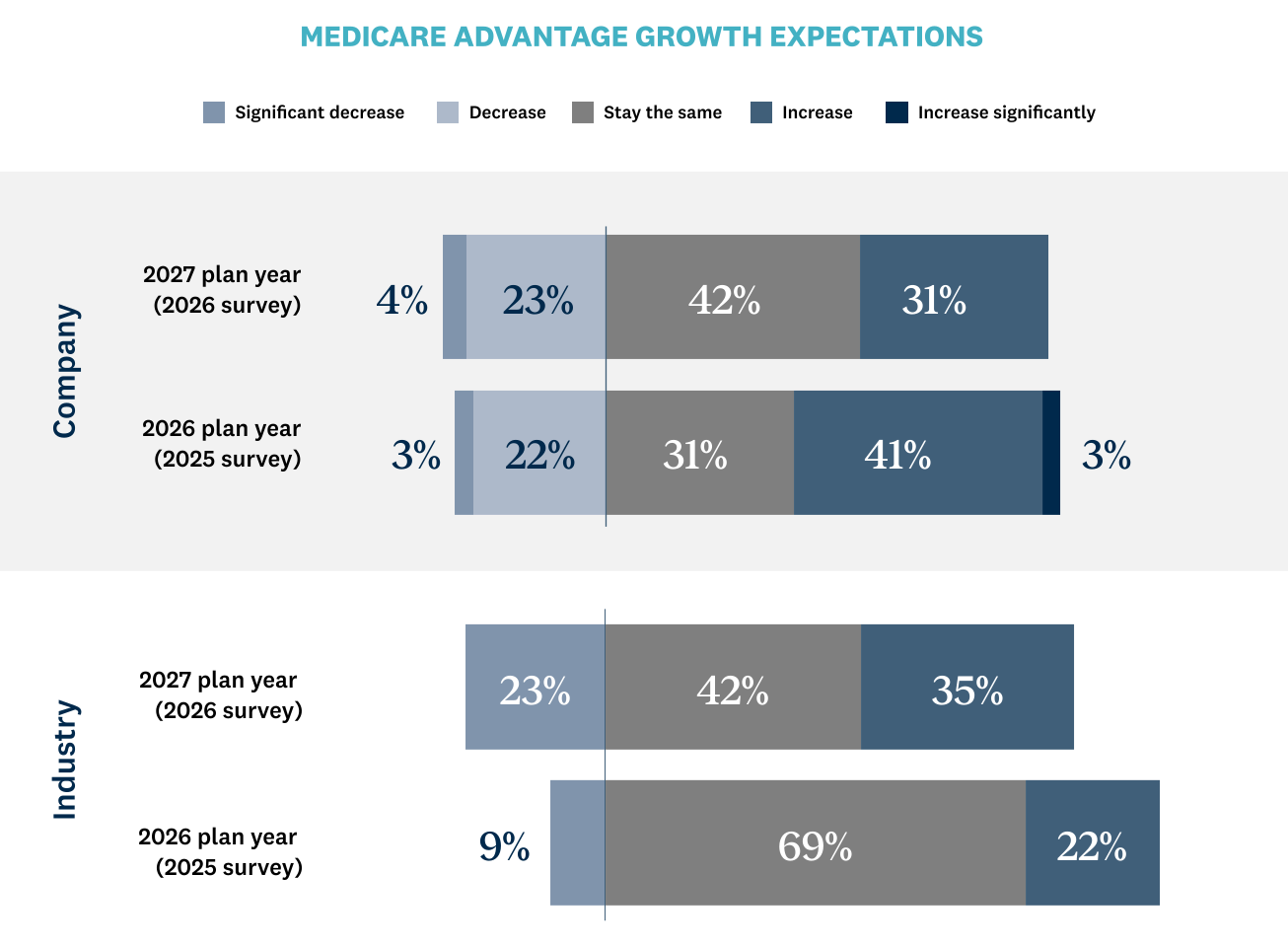
Medicare Advantage leaders have become less optimistic about their enrollment growth over the last 3 years. Looking ahead to PY2027, 69% of respondents expect their Medicare Advantage membership to remain flat or contract. Health plans are being more selective about the markets, segments, and products in which they grow enrollment. Leaders are also prioritizing retention, member mix, and channel performance over expansion.
Expectations about market-wide enrollment outlook are mixed. Nearly a quarter of leaders (23%) indicated that they expect overall Medicare Advantage enrollment to decline in PY2027. This is a meaningful shift from last year’s survey, in which only 9% projected industry-wide enrollment decline. On the other hand, 77% of leaders believe the market will hold steady or continue to grow, albeit perhaps at a lower rate than previous years.
Market deceleration, margin pressure, benefit pullbacks, and market exits have taken hold and are likely contributing to the dampened outlook.
Most Medicare Advantage leaders anticipate a decline in benefits for 2027
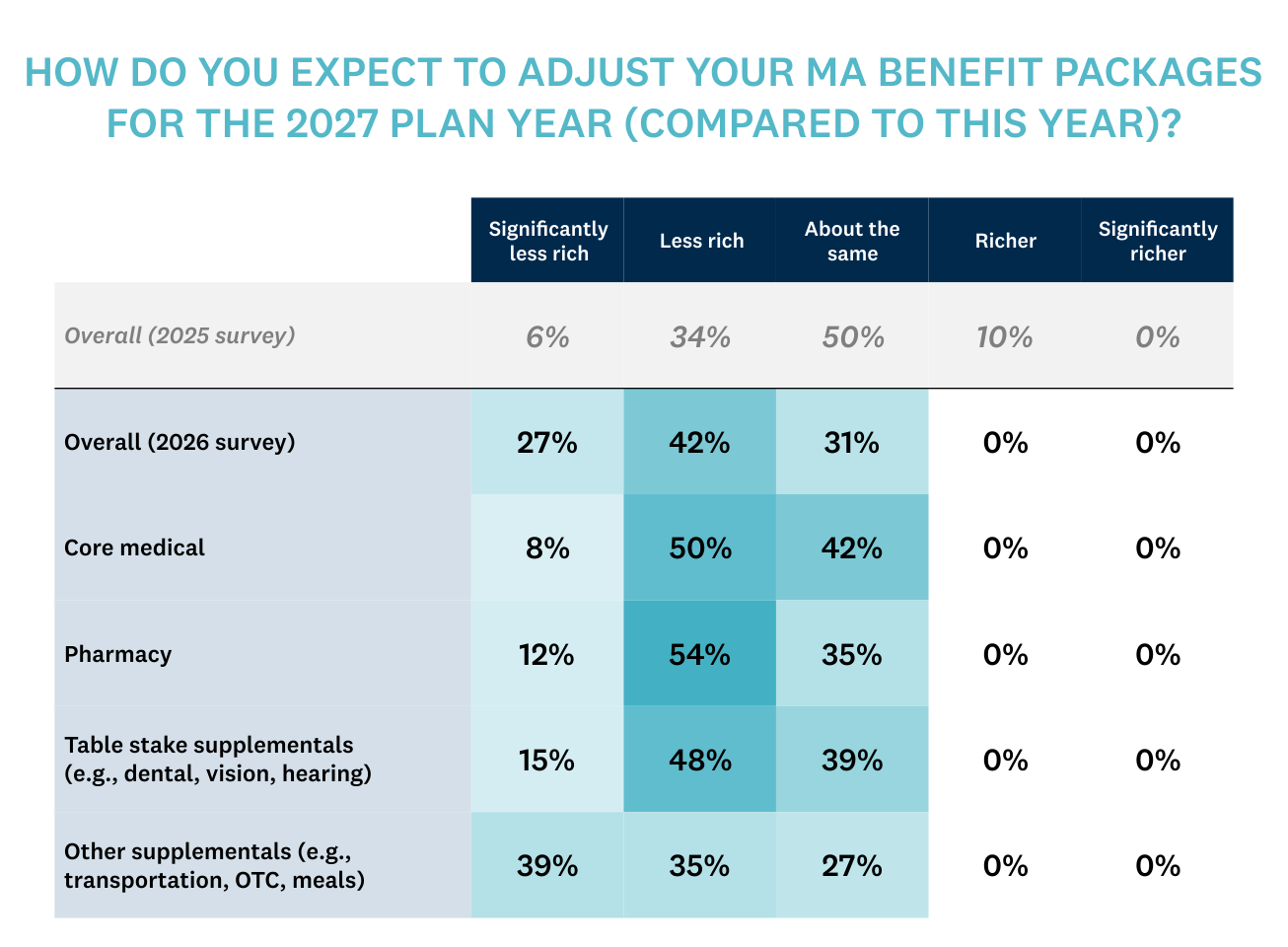
Nearly 70% of leaders expect their overall benefit packages will be less rich in PY2027, a sharp increase from the 40% that indicated the same last year. Not a single respondent forecasted richer benefits.
While core supplemental benefits remain table stakes, leaders signaled the pullbacks on other supplementals will continue for PY2027. Most of our survey responses were collected prior to the January 26th Advance Notice, so if rates indeed hold relatively flat, these trends may shift further toward reduced richness.
Leaders’ 5-year outlook for Medicare Advantage is more positive than in 2025
Leaders are focused on overall profitability, legislative and regulatory uncertainty, and medical cost growth in the year ahead. Star Ratings, risk adjustment, and medical cost growth are the highest-priority operating functions for Medicare Advantage. Most leaders surveyed view Medicare Advantage as a top enterprise priority, further supporting the growth potential for this business segment.
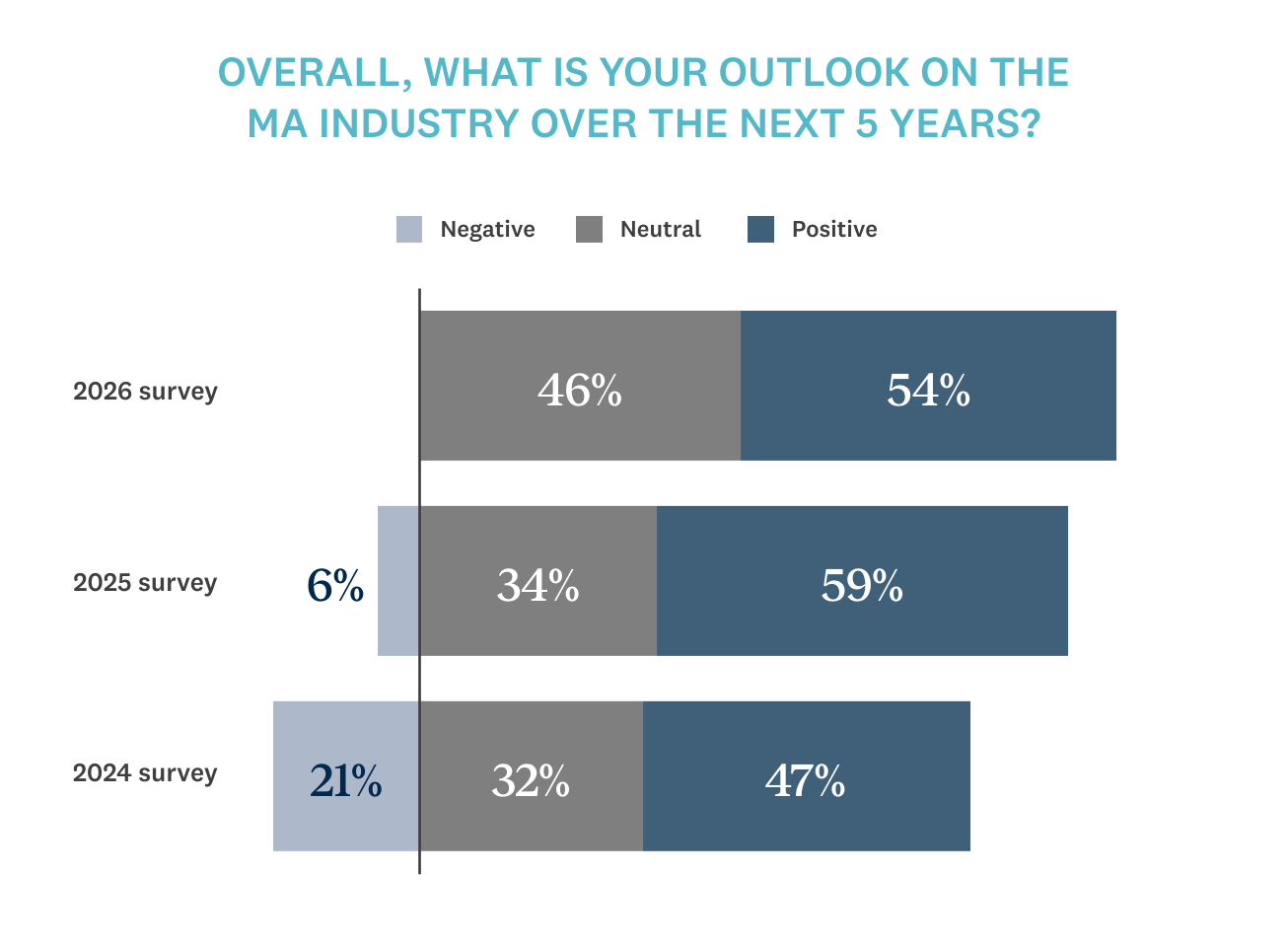
Given leaders’ responses to questions around market participation, financial sustainability, and enrollment and benefits forecasts, the market is clearly in a challenging moment. However, respondents remain generally optimistic about the future of Medicare Advantage over the next 5 years. While the portion of leaders expressing a positive outlook has contracted marginally, no leaders indicated a negative 5-year outlook.
Overall, this reflects a slightly more bullish forecast for the industry and reinforces that the market has reached an inflection point. Leaders want to stay in the market, but achieving the longer-term positive outlook will require significant changes.
Implications for health plans: Strengthen the foundation for future growth
The Medicare Advantage “gold rush” is over. While Medicare Advantage remains attractive, health plans must determine whether and how they can operate sustainably in this increasingly challenging landscape.
Some health plans are addressing this challenge by evaluating market exits or becoming increasingly selective of the products and markets in which they choose to operate. Health plans that decide to stay must focus on fundamentals that create a clear, achievable path to profitability across the critical revenue and cost levers.
As such, health plans must now evaluate strategic considerations across the following actions:
Make explicit and strategic stay-or-exit decisions. Health plans must clearly assess whether they have a viable path to sustainable margin. This will require difficult decisions about where to double down, selectively retrench, or exit to protect enterprise value. They must weigh the implications of these decisions across not only Medicare Advantage but also other health plan lines of business and operations.
Adopt a multi-year profitability mindset focused on core performance levers. For health plans that decide to stay, margin recovery will require more than short-term fixes. It will require coordinated, multi-year turnaround efforts across strategy, product, and the supporting operating model. Sustainable improvement depends on programs that focus on revenue and cost levers. These programs need clear ownership, defined success metrics, strong governance, and robust analytics to deliver consistent results.
Evaluate benefit return on investment (ROI). As benefit richness contracts, health plans must shift to offering targeted benefit strategies that demonstrably support retention, quality, and cost control. Health plans will need to manage supplemental benefits as investments rather than marketing tools.
Strengthen provider partnerships for impact, not scale. Deeper collaboration with fewer, more aligned providers will be essential to manage medical cost trends and improve member outcomes. Interoperability, shared accountability, and value-based models should take precedence over network breadth.
Engage proactively on policy sustainability. Even with a favorable federal posture toward Medicare Advantage, regulatory action is resetting the market. Health plans should actively advocate (directly or through industry associations) for policy stability—particularly around benchmarks, risk adjustment, and Stars Ratings—to support long-term program sustainability.
The era of Medicare Advantage growth at all costs has ended. Now more than ever, Medicare Advantage plans must make the difficult decision of either exiting the market or focusing on the fundamentals. A sustainable book of business will be based on a balanced product portfolio and well-established capabilities necessary to appropriately manage the evolving membership population.
Data sources For this report, we analyzed the following files from CMS: “Monthly Contract and Enrollment Summary,” “Monthly Enrollment by Contract/Plan/State/County—CPSC,” “MA State/County Penetration,” and “Star Ratings Data Tables” for the years 2022–2026. This analysis includes all Medicare Part C plans, including regional PPO and Medicare cost plans.
FFS enrollment is calculated as (Medicare Eligible members by county—Medicare Advantage Enrollees by County) and leverages the MA State/County Penetration files.
CMS limits the publishing of enrollment information that applies to fewer than 10 members, which can drive difference in enrollment metrics across files. Any chart above that details enrollment by parent organization, entity type, plan type, or network type leverages “CPSC” enrollment files and will differ marginally in total from charts that detail Medicare Advantage vs. Original Medicare. Analyses above detailing plan counts also leverage CPSC files as their source and may differ from product landscape and benefit files from CMS.
2026 Medicare Advantage penetration and eligibility information is unavailable for Connecticut and Alaska due to recent changes in their county mapping methodology. We have excluded Connecticut and Alaska in any analyses that detail penetration rates or Original Medicare enrollment to account for this limitation.
In January of 2026, HealthScape surveyed line of business leaders at over 35 health plans about their market outlook for 2027 and beyond.
Health plan categorization Plans are categorized as for-profits, Blues, and nonprofits based on HealthScape mapping. Analyses that summarize enrollment by entity, plan, or network types exclude enrollment.
Blues plans referenced include only nonprofits. Elevance and subsidiary plans are classified as for-profit. Nonprofit plans referenced exclude nonprofit Blue-branded plans and subsidiaries.
For purposes of this study, “startup plans” are or were recently venture-funded or partnered with outside capital to achieve rapid growth through market expansion or partnerships. Some people refer to these organizations as “insuretech.”
US territories Prior years’ reports limited data to the 50 states and DC. This year’s report includes new and historical data for US territories, though they are not shown on maps.
Against a backdrop of regulatory uncertainty, Medicare Advantage leaders are prioritizing resilience through transformation, with cautious optimism for the year ahead.
Health plans are entering a defining period. As they grapple with unprecedented operational pressures, their actions now will determine how they will compete in a fundamentally different environment.