Forces are converging toward transformation
Health plans face a convergence of pressures and opportunities that make a foundational transformation both necessary and increasingly possible.
- Affordability has become the defining issue and binding constraint on transformation. Healthcare costs are rising faster than income and revenue, driving changes in employer purchasing strategies, enrollment patterns, and other consumer behavior.
- Disruption is accelerating across the ecosystem. New entrants and models aim to create greater control of cost, bypass traditional insurance structures, and reduce administrative load.
- Tensions are escalating between health plans and providers as they are both under pressure to reduce costs. They will need to work together to overcome the root problems.
- Uncertainty and rapid policy changes are creating a challenging compliance environment. Organizations are often scrambling to adapt, even as the overall regulatory landscape makes systemic change difficult.
- Advanced digital and AI tools are unlocking transformative operational, clinical, and personalization capabilities. However, this requires up-front capital, modernized data infrastructure, and new organizational skill sets.
Health plans are in an incredibly difficult position—they must deliver immediate financial performance while simultaneously preparing for a very different future. Striking a balance between near-term and long-term goals will be the defining strategic challenge of 2026. Successful health plans will help transform the healthcare ecosystem for greater affordability and better health outcomes.


1. Address the affordability problem with sustainability as the guiding principle
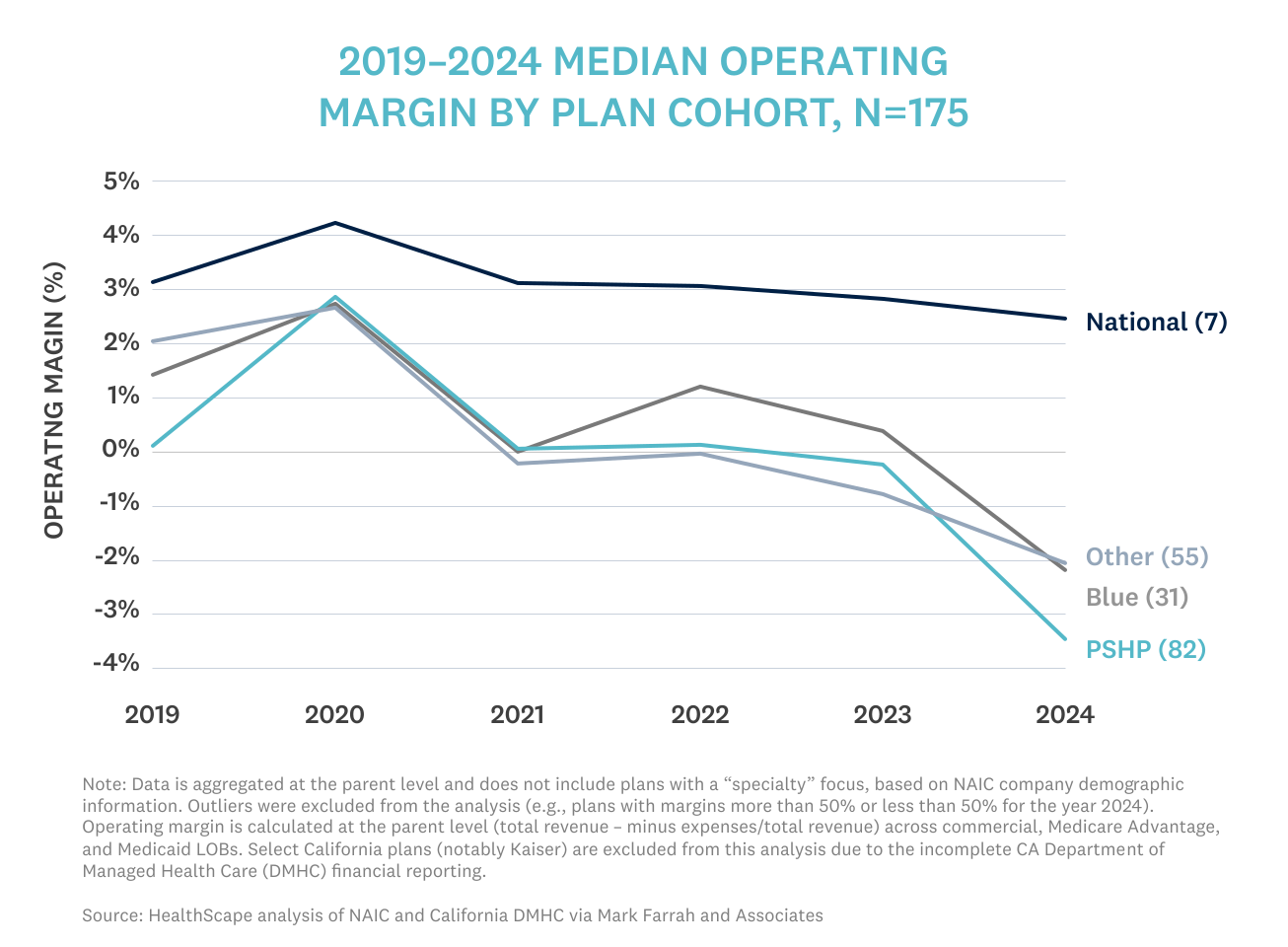
Many health plans—particularly Blues, regional not-for-profits, and provider-sponsored health plans—must refocus on the fundamentals of their business. Meeting future performance expectations will require more sophisticated operational capabilities, advanced network strategies, and stronger cost management discipline. Optimizing these capabilities will lay an essential foundation to address the financial performance problem and free up capital to invest in the necessary next-gen capabilities.
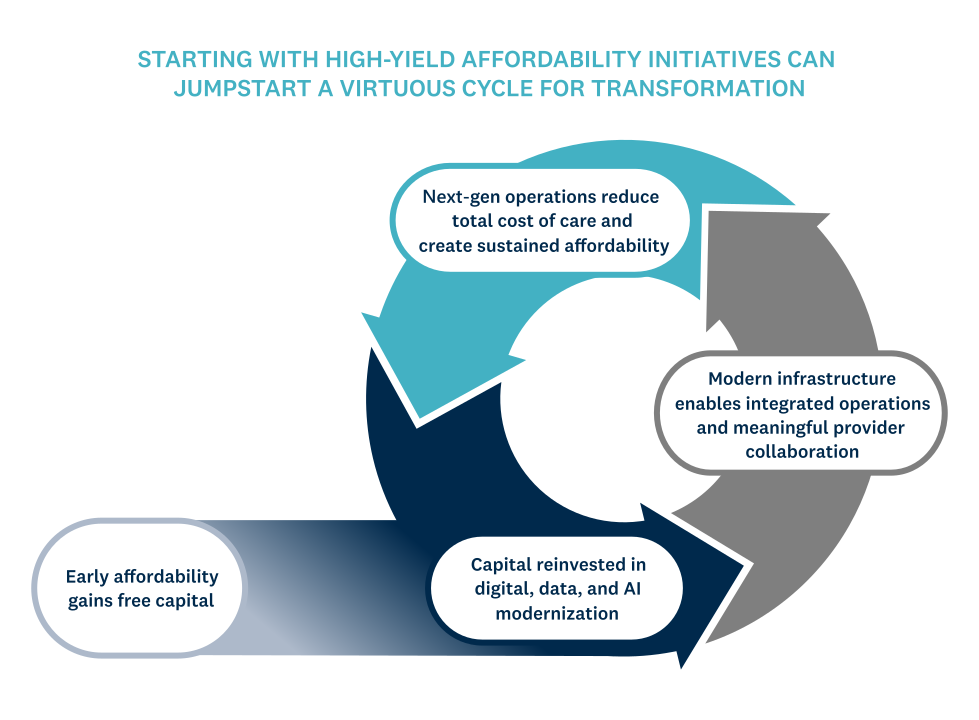
Health plans have faced a persistent chicken-and-egg dynamic that has shaped most payer strategy conversations over the past 2 years: They need affordability to fund transformation, but they need transformation to achieve affordability.
Many health plans have focused on the necessary early steps to contain costs—pursuing near-term initiatives such as strengthening payment integrity, optimizing site of care, and refining medical policies. While these incremental steps are necessary, every leader knows they are insufficient to solve affordability.
This raises an essential question: What must be true to achieve sustainable affordability?
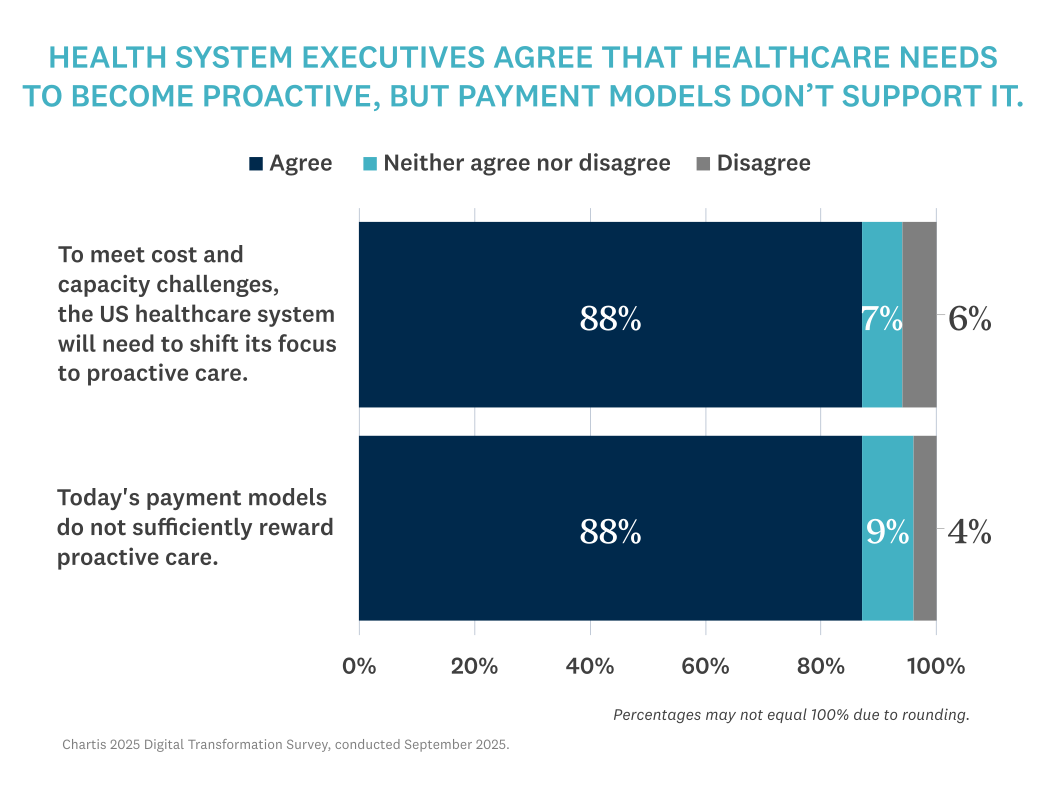
- Care management must shift to a more proactive model encompassing specialty care and behavioral health integration
- Payment models must pay for proactive, value-based care
- Pharmacy management must keep pace with the rapid acceleration of biotech innovation
- Consumers must experience less friction through more innovative product design, greater transparency, and easier navigation
- Analytic and actuarial precision must improve to avoid continued mispricing of risk
2. Establish a modern digital ecosystem to enable the future delivery model
While each health plan’s differentiators will vary, the direction is consistent: health plans must rebuild core functions on a digital and AI-enabled foundation, with the member at the center.
Many health plans have been building a care enablement posture as their future state. Now with the advent of new technologies, health plans can operationally achieve this vision.
Digital and AI capabilities are:
- Delivering personalized, real-time communications and customer service for better patient and provider experiences
- Proactively identifying member health needs and steering appropriate care toward the right settings and providers
- Driving autonomous operations in areas like provider data management, prior authorization, payment integrity, and benefits administration
Achieving this seamless ecosystem requires overcoming substantial barriers as health plans will need a foundation of elastic infrastructure, high-quality data, interoperability, and digital ecosystem that supports speedy development and adoption of business applications. This requires near-term action and investment.
Most health plans today remain bogged down by technical debt, fragmented legacy platforms, and complicated vendor portfolios across each major function.1 The complexity of the current operating model and pressure to maintain performance make this transformation journey challenging.
While many health plans have started their digital transformation journey with regulatory compliance mandates and financial processing capabilities, health plans need to work toward more holistic transformation. They will need to develop a strong digital core, key organizational capabilities, and business reinvention to enable a dynamic future organization that can operate in hybrid human and agentic ways.
To do this, they will need to establish key organizational capabilities that prioritize and enable AI and other advanced digital tools responsibly and at scale. These capabilities include built-in adaptability for future change and enterprise governance for digital and AI.
Successful digital modernization will require a clear strategic vision, sustained investment, and organizational readiness. It also will require a disciplined focus on enabling efficiency and affordability gains since health plans will need them to fund continued investment.
1 In our experience, 20–60% of health plans’ IT spends lead to additional technical debt. Conversely, we recommend health plans allocate 10-20% of IT budgets to reducing the debt. This will incrementally decrease "keeping the lights on" expenses and efforts that negatively impact quality.
3. Reenvision collaboration with provider organizations, placing the consumer at the center
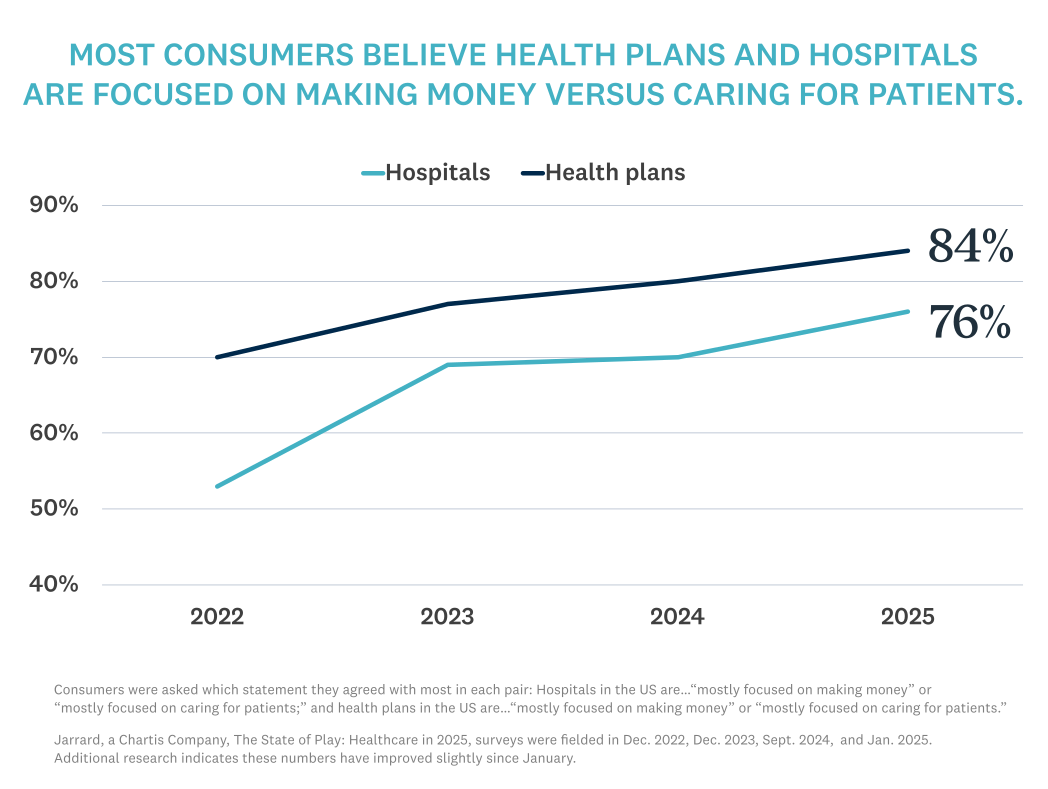
The industry has long talked about health plan-provider collaboration, but tensions are at an all-time high. Efforts to control costs have intensified disputes over contracting, prior authorization, and claims processing. These burdens ultimately fall on patients, who must navigate delays, denials, and administrative complexity to meet their basic care needs.
Transforming for tomorrow starts with concrete steps today
Preparing for this industry transformation will require massive advancements in operational capabilities, access to capital, and administrative efficiency. In many cases, these demands necessitate greater scale. For many health plans, the strategic imperative is no longer whether to change but how to compete and remain relevant in a rapidly evolving market.
Executives and boards should be asking foundational questions such as:
- What is our long-term strategic identity in a consolidating market? In which segments, customer groups, geographies, and products can we truly compete and win?
- How will we materially improve affordability for our consumer and employer customers? Do we have the capabilities necessary to succeed at scale?
- Do we have alignment and collaboration with providers to influence cost, quality, and proactive care delivery? If not, how do we build them?
- Is our technology infrastructure viable for the next-generation delivery model? How will we fund the required investments in AI and digital capabilities?
- How must our workforce, culture, and regulatory posture evolve to execute our strategy and meet our customers’ expectations?
Over the past 2 years, health plans asking these questions have increasingly turned to partnerships and more formal consolidations to provide what they urgently need: access to essential capabilities and capital to scale them.
In this consolidating market, health plans can increase their relevance by evolving and strengthening their strategic identity. For some, this could mean diversifying into new products or differentiating in affordability and consumer experience. For others, it may entail specializing in areas like government-funded plans, the individual market, or distinctive care enablement platforms.
While consolidation or partnerships are options, they are not the only paths forward. What matters most is that health plans address these key questions to clarify their future, evaluate their strategic options, and develop a multi-year transformation roadmap. This will require difficult choices, disciplined execution, and true organizational readiness.
Health plans that take these steps now will secure their sustainability while reshaping the care ecosystem for affordability and better outcomes.
2 Examples from 2025 include Independent Health and MVP Health Care, Medica and UCare, and several others.