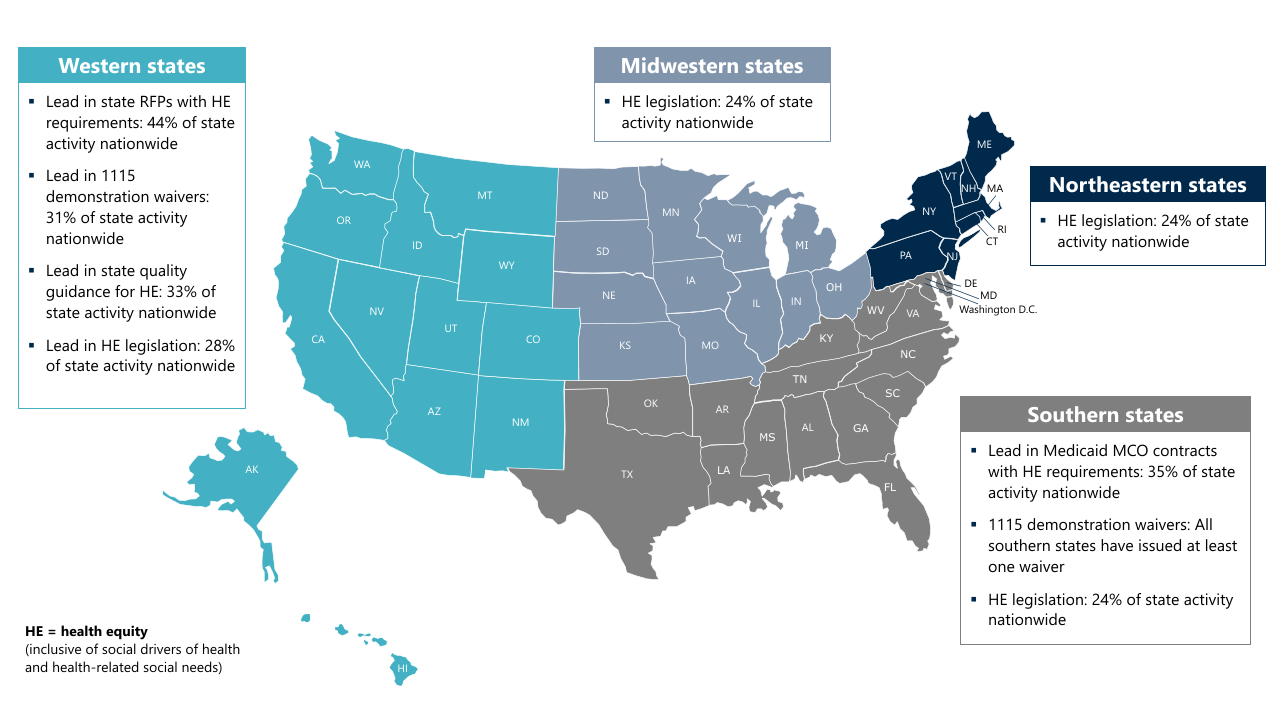
A wave of federal actions has introduced uncertainty around efforts to improve health equity. But at the state level, momentum has not stalled.
Many states continue to pass legislation and policies that support the most under-resourced populations. And the business case for payers to act is stronger than ever.
States were highly active over the course of 2025, with 37 introducing new legislation focused on health equity.1
Alongside these tailwinds supporting payers’ work to advance health equity, pronounced headwinds make the need to forge ahead even more important. Nearly half of the US population cannot access or afford healthcare.2 Federal policy changes—such as cuts to Medicaid, the Affordable Care Act (ACA), and other programs under the One Big, Beautiful Bill Act—could result in as many as 17 million more people losing insurance over the next decade.3 At the same time, financial and operational challenges continue to bear down on organizations.
Payers will need to build data-driven, flexible, and collaborative programs to simultaneously address their growing operational challenges and deliver on their mission of improving health outcomes for all.
In this brief, we discuss state policy activity and three core actions for payers to advance health equity.
Three core action areas for payer to advance health equity
In an era of uncertainty and change, organizations face a risk of stalling progress toward health equity precisely when it matters most. Without continued action, disparities will grow, creating even greater financial and operational strain across the entire healthcare system.
Our annual review of state health equity policymaking confirms that the business case for creating health equity remains.
As both payers and providers navigate intense margin pressures, leaders should consider improving health outcomes for everyone as a strategic lever for financial stewardship and solvency. They must act decisively, aligning programs for the greatest impact across margin and mission. Today’s imperative is to bring governance, accountability, and data-driven discipline to integrate health equity into how the organization operates.
Three areas of focus will be critical in the days ahead:
1. Embed health equity into operational imperatives
What happened with state policy in 2025:
17 states issued specific requirements for achieving health equity goals as part of their state quality programs.
23 states introduced funding models to advance health equity goals, and nine states enacted them. These models include supporting rural hospitals to extend access to care, addressing health-related social needs (HRSN), and funding interventions that reduce health disparities.
23 states now utilize the National Committee for Quality Assurance (NCQA) Health Outcome Accreditation. Four states use the NCQA Community-Focused Care Accreditation to develop their statewide requirements aimed at identifying and addressing barriers that prevent members from accessing high-quality care.4
Why it’s important now:
Healthcare organizations are operating in an environment defined by sustained financial pressure, workforce shortages, consolidation, and growing instability in insurance coverage. As margins tighten and care delivery systems stretch—particularly in rural and underserved communities—improving health outcomes for all members has become more than a quality mandate. It is also a strategic necessity:
Federal agencies and regulatory bodies continue to require organizations to collect and analyze stratified quality data in order to identify and address disparities. Simultaneously, organizations must do more with fewer resources: manage higher acuity populations, respond to shifts in Medicaid and exchange enrollment, and maintain access as hospitals close or consolidate.
Failing to understand who is at greatest risk—and why—directly impacts both quality performance and financial sustainability.
Social drivers of health (SDOH) continue to influence up to 80% of health outcomes.5 Their impact has intensified amid rising housing insecurity, food costs, transportation barriers, and coverage churn. These pressures disproportionately affect rural communities and populations experiencing loss or interruption of insurance—leading to delayed care, avoidable utilization, and poorer outcomes.
Quality programs increasingly recognize that addressing SDOH is essential not only for improving outcomes but also preventing unnecessary costs and utilization in a constrained environment.
As healthcare organizations today are redesigning care models to be resilient, efficient, consumer-oriented, and responsive to current realities, understanding the root cause of health inequities is even more critical.
Health equity work should not be a standalone agenda for healthcare organizations. Rather, leaders must embed health equity into all aspects of healthcare delivery and public health systems. Doing so will advance both health equity and organizational well-being—improving health outcomes for all, enhancing the consumer experience, and reducing costs.
What’s next: Recommendations for payers
Leverage data like geography, social needs, and patient-reported race and ethnicity to enable insight into barriers and root causes of disparities.
The Centers for Medicare & Medicaid Services (CMS) started reimbursing Z codes in 2024 to identify patients with social needs like housing, food insecurity, and lack of transportation. This evidence-based, reimbursable practice is low-hanging fruit that improves patient outcomes while strengthening the organization’s financial and quality performance.
Move beyond identifying disparities to actively redesigning workflows, care management strategies, and value-based arrangements to address them. This includes targeting enhanced care coordination and community-based partnerships in high-risk geographies, aligning incentives with equity-focused quality measures, and embedding accountability for reducing disparities into performance management.
Embedding health equity into an organization’s operational imperatives helps improve outcomes for vulnerable populations while stabilizing utilization, protecting margins, and meeting evolving state and federal expectations.
2. Target interventions for populations with the greatest disparities
What happened with state policy in 2025:
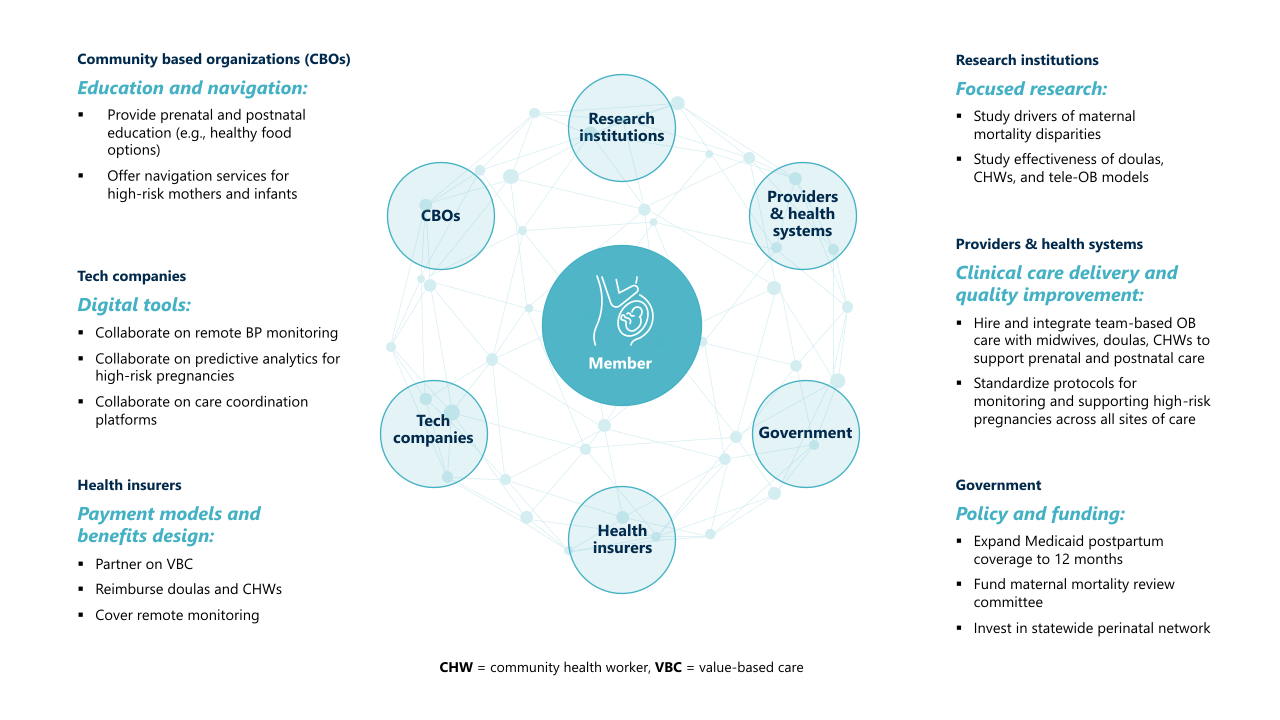
Maternal Health
26 states introduced 43 new initiatives focused on reducing racial, income, and geographic disparities. They seek to expand Medicaid coverage, create maternal morbidity task forces, and establish provider care standards.
Initiatives adopted: 14
Still active: 9
Vetoed or inactive: 20
Rural Health
19 states introduced a total of 26 policies to address provider shortages and access challenges through task forces and incentive programs. (These are in addition to states’ federally funded Rural Health Transformation program plans.)
Initiatives adopted: 13
Still active: 3
Vetoed or inactive: 10
Pediatric Health
19 states introduced 26 new initiatives aimed at improving access to care, expanding behavioral and developmental supports, and reducing financial barriers for families.
Initiatives adopted: 19
Still active: 3
Vetoed or inactive: 4
Behavioral Health
32 states introduced 54 interventions focused on enforcing stronger parity requirements, expanding coverage to behavioral health services, and improving access to community-based care.
Initiatives adopted: 31
Still active: 8
Vetoed or inactive: 15
Why it’s important now:
As new dynamics threaten to exacerbate disparities, organizations can make a greater impact by targeting interventions for populations that experience the greatest gaps in health outcomes, costs, and access.
Across the country, gaps in coverage and care for specific populations will widen. By leveraging the data assets outlined above, organizations can map the greatest gaps in healthcare access, outcomes, and experience for these populations. This will help to inform root causes so organizations can then establish proactive interventions.
Organizational interventions in action Organizations may need to invest in capabilities and solutions to address those gaps. For example, in 2025, Molina announced a $1.6 million investment to improve health outcomes across various populations in the state of Illinois. This included addressing disparities in maternal health and creating greater access to behavioral health resources.
CareSource Georgia also announced a grant to Georgia Family Connection Partnership to improve health outcomes in rural Georgia. This grant aims to leverage technology partnerships to improve access for new mothers and infants by layering technology-enabled solutions with community-based resources.
What’s next: Recommendations for payers:
Using collected data, organizations can systematically analyze which populations experience worse outcomes, higher costs, and poorer utilization. Organizations can stratify this data by dimensions such as region or zip code, insurance product, patient language, race and ethnicity, and HRSN.
Supplementing these insights with stakeholder engagement can help organizations further understand root causes, which then enables the organization to prioritize interventions that will have the greatest impact.
Tying internal and external goals to priority populations holds teams accountable to taking action and further embeds these goals in day-to-day operations.
To help meet the goals of improving the total cost of care, reducing fragmentation, and avoiding unnecessary costs, operational metrics and key contracts should specify measures and reporting requirements that reflect clinical outcomes, SDOH, and HRSN.
Payers are well positioned to identify the populations with the greatest disparities and develop solutions that can close the care gaps. They can partner with funding entities such as state agencies and foundations to align on where funding can make the biggest impact.
Ways to start include active lobbying with state representatives and hosting community roundtables to discuss local issues. We discuss additional opportunities to collaborate for results in the next section.
3. Collaborate with complementary partners and policymakers
What happened with state policy in 2025:
Nine states passed legislation that promotes cross-sector partnerships among providers, educators, and community organizations.
Providing access and equity for distressed and rural communities was a special focus. For instance, Oregon, Massachusetts, and Illinois led efforts to establish statewide coalitions, trust funds, and transformation programs.
Why it’s important now:
Payers cannot tackle these complex issues alone. It requires applying a cross-sector approach among strategic community partners with shared goals. Bringing together capabilities and relationships across the spectrum of care can improve outcomes and lower the total cost of care for all stakeholders. It can also spread the burden of upfront and ongoing investment needs.
Policymakers play a critical role in this collaborative effort by creating enabling environments, aligning incentives, and supporting the removal of structural barriers through thoughtful legislation and advocacy. By engaging policymakers as active partners, organizations can amplify their impact and ensure that initiatives are sustainable and scalable across diverse communities.
Aligning on a vision for long-term improvement of health outcomes for all communities—not just those that positively impact the bottom line—is vital to creating a sustainable positive impact on our healthcare system, communities, and economy. Doing so can increase economic gains by around 10%.6
Communities are finding success with models like C.O.R.E. (Communities Of Resilience and Excellence) to advance comprehensive partnerships using a systems-based approach. These community collaborations can tackle complex HRSN issues like food insecurity.
What’s next: Recommendations for payers:
Robust data capture from the continuum of member engagement points across payers and provider organizations can improve analysis and solution development across partners.
When developing a community coalition, organizations should start by considering payer and community-based organizations with which they already interact.
For example, a payer can partner with community-based organizations that support specific high-need populations to align complementary capabilities and incentives (e.g., reducing avoidable utilization, closing care gaps, and strengthening community capacity). This way, each partner advances their mission and operational goals.
Proactive interactions can position organizations to help shape policies that advance both equity and quality.
Lead the way forward
The US healthcare system stands at a pivotal crossroads, where conflicting policies and uncertainty risk accelerating existing inequities. However, healthcare organizations have an opportunity—and a responsibility—to lead the way forward.
By maintaining momentum, leveraging data-driven insights, and exploring innovative partnerships and funding avenues, these organizations can make a tangible difference. Inaction will only allow disparities to deepen and threaten the financial viability of payer and provider organizations. With a coordinated approach, the healthcare industry can not only withstand shifting policies but also lay the foundation for healthier, more equitable communities in the years to come.
Additional Contributors: Nick Brothers
Methodology
Chartis maintains a tracker of state health equity requirements that address health equity and SDOH. The tracker covers data from state departments of health and state legislatures from January 2020 to September 2025. Underlying data is from the Centers for Medicare & Medicaid Services (CMS) Medicaid/CHIP regulations and guidance, CMS Health Equity Priorities publications, state departments of health services, and federal and state law trackers.
Sources:
1 Health equity: having a fair and just opportunity to be as healthy as possible.
3 H.R. 1 will disproportionately disrupt population healthcare outcomes (e.g., rural, low income, children) in the 40 states that expanded Medicaid coverage and areas with high marketplace enrollment. The federal legislation will result in loss of coverage, limit access to care, and exacerbate affordability concerns among health plans, health systems, and the communities they serve. H.R. 1 has roughly $1 trillion in cuts to healthcare programs, with an estimated 7.8 million people losing insurance coverage by 2034. Cuts in Medicaid and SNAP funding will touch SDOH programs, which will destabilize both community well-being and economic activity.
4 NCQA Health Outcome Accreditation was formerly known as Health Equity Accreditation, and NCQA Community-Focused Care Accreditation was formerly known as Health Equity+ Accreditation.
5 Melody L Greer, et al, “Social determinants of health data quality at different levels of geographic detail,” Studies in Health Technology and Informatics, May 2023, https://pubmed.ncbi.nlm.nih.gov/37203650/
Health plans are entering a defining period. As they grapple with unprecedented operational pressures, their actions now will determine how they will compete in a fundamentally different environment.
Driven by the moral imperative to address health disparities and objectives to improve health outcomes, many healthcare organizations have committed to achieving health equity.
The impending cuts to Medicaid funding will pull at the fabric of US communities, health systems, and payers. But strategic collaboration could help mend—or even prevent—some of the anticipated tears.