
Too often, organizations treat trust as a communications challenge or an afterthought. In reality, trust is a strategic asset that should inform decisions from the outset. Trust can directly influence a health plan's ability to execute strategic priorities, from market expansion and affiliations to benefit redesign, provider negotiations, and regulatory approvals.
Understanding how key stakeholders (including members, employers, providers, brokers, regulators, and employees) are likely to respond can help health plan leaders anticipate risk, strengthen execution, and improve the long-term success of transformational initiatives.
That imperative has never been greater. Health plans are navigating an increasingly volatile environment, with mounting financial pressure, regulatory scrutiny, and difficult strategic decisions. In 2025 alone, 73% of health plans reported annual operating losses.1
These pressures are forcing leaders to make decisions that can fundamentally reshape stakeholders’ relationships with their organizations. In moments of significant change, trust shapes whether stakeholders have confidence in leadership, accept difficult trade-offs, and remain engaged through uncertainty.
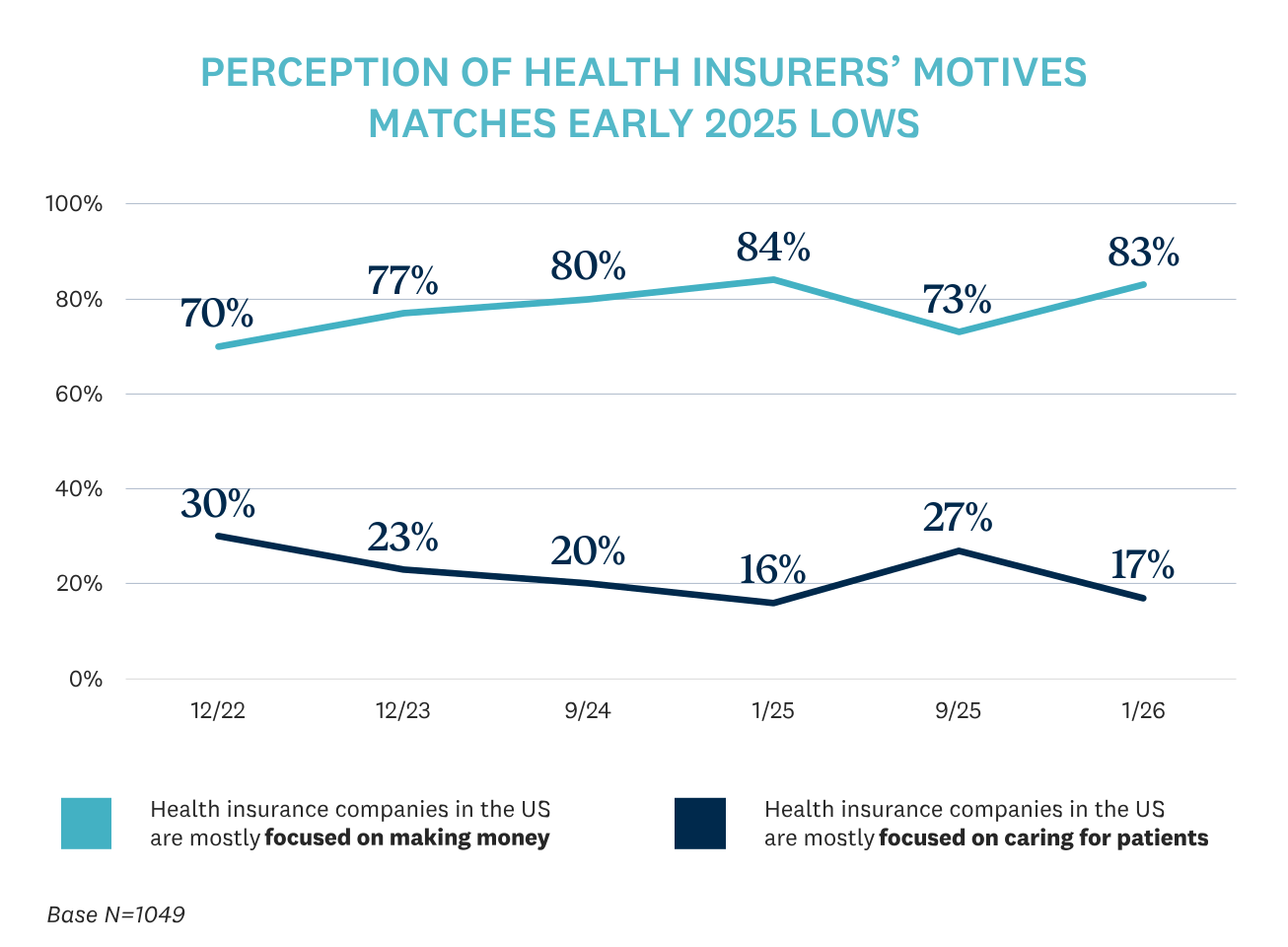
Our recent national survey found that 83% of consumers said they believe US health plans are more focused on making money than caring for members.2 This growing public skepticism reinforces the importance of trust. Organizations with stronger stakeholder trust are better positioned to retain members, sustain growth, and execute organizational change with less disruption. Given its strong influence on member loyalty, program engagement, and perceptions of coverage fairness, trust remains a critical driver of health plan performance.
Source: “Demonstrating value when trust is fragile—National consumer survey: Health insurance,” May 2026, HealthScape Advisors.
Trust is a prerequisite for strategic success
Health plans that have taken the time to build trust by clearly defining and consistently demonstrating their value in their communities are better positioned to achieve their strategic objectives. When trust and credibility are strong, stakeholders are more likely to give the benefit of the doubt. When trust is weak, stakeholders may even view necessary decisions as self-serving for the organization.
For instance, a regional health plan recently experienced the value of building relationships before a major change. A strategic communications and change management program helped the organization navigate an affiliation by proactively addressing internal and external stakeholder concerns even before the affiliation was announced. The health plan was able to clearly articulate the transaction’s value and equip leaders to guide teams through change.
As a result, sentiment remained positive—particularly among providers, employers, regulators, and community stakeholders.
Case study: Building trust before a defining organizational change
A healthcare organization preparing for a major affiliation invested in stakeholder communications before the transaction was publicly announced. Leaders developed a clear narrative around the affiliation's purpose, engaged key stakeholders early, and equipped leaders to address concerns consistently.
Building trust before it’s needed
Despite understanding the importance of trust, many health plans make the same mistake: They tell their story too late or only show up when there is an ask. Organizations under scrutiny often respond with a rebrand, new messaging, or a high-profile campaign intended to signal change. But when stakeholders haven't seen meaningful action first, they often view those efforts as image management rather than genuine transformation.
Leading organizations distinguish themselves by embedding trust and value into their broader strategy. They treat storytelling as an ongoing discipline that builds familiarity and credibility well before a critical decision point.
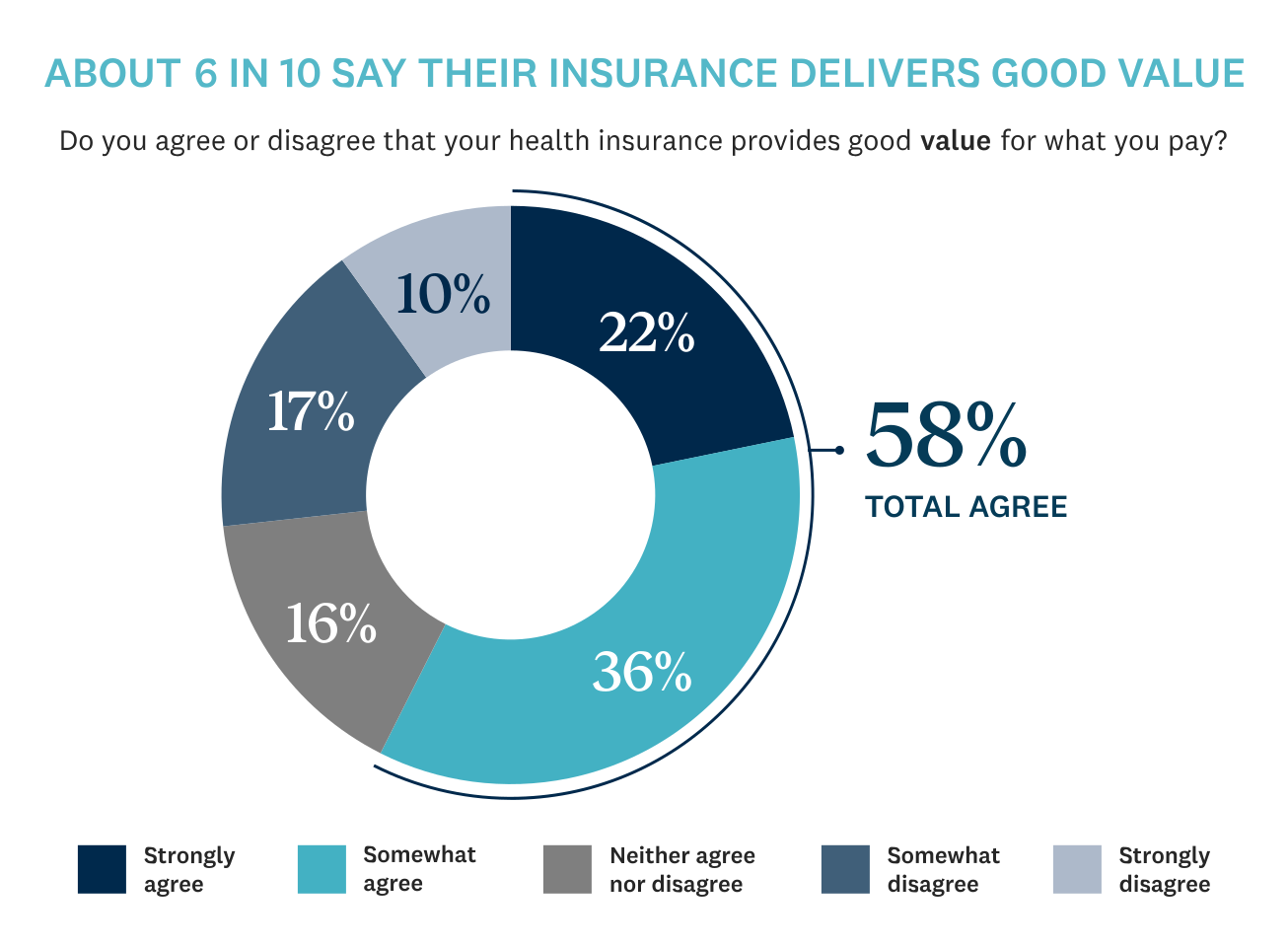
Our survey results reinforce why that sustained visibility matters. In contrast to consumers’ overall perception of health plans, more than half of respondents believe their health insurance delivers good value. Nearly 7 in 10 consumers say it is important for health plans to support their communities, and more than half say greater visibility into those efforts would improve their perceptions of health plans.2 The opportunity is to reinforce that value through consistent, visible actions that stakeholders can see and experience.
Case study: Creating an owner's mindset through strategic engagement
When a healthcare organization needed employees to embrace a new strategic direction, leaders recognized that communications alone would not drive change. Through focused stakeholder engagement, leadership visibility, and structured opportunities for dialogue, the organization connected employees to the strategy and helped them understand their role in achieving it.
How trust is earned will look different across stakeholder groups.
For providers, trust is built through partnership and consistent engagement, not communications alone. Listening sessions, advisory forums, and greater transparency around reimbursement and policy decisions can create a track record of responsiveness and partnership. Over time, that can help shift the relationship from transactional to more collaborative, creating a stronger foundation for navigating difficult decisions with providers.
Case study: Trust-building looks different for every stakeholder
A regional payer faced a critical strategic decision and needed confidence that stakeholders would support the path forward. Rather than relying on assumptions, the organization conducted stakeholder research to understand perceptions, concerns, and priorities across key audiences.
For members, trust is built through the cumulative experience of the health plan delivering value when it matters most. Plans can reinforce that value at key moments across the member journey, whether helping members understand their benefits, anticipate costs, or navigate care. Each positive interaction becomes another proof point that the plan is actively supporting members’ health and well-being.
Source: “Demonstrating value when trust is fragile—National consumer survey: Health insurance,” May 2026, HealthScape Advisors.
What health plans can do differently
The lesson is simple: Trust can't be created at the moment of change. Leaders must build trust and be visible beforehand through consistent actions and communications that reinforce, rather than replace, earned credibility.
Leading health plans embed trust into their broader strategy through four disciplines:
- Anchor the narrative in proof, including outcomes, data, and visible community investment, rather than messaging alone.
- Integrate storytelling at every touchpoint to reinforce credibility, executing across executive leaders, provider relations, and frontline teams.
- Treat reputation as a core business asset, managing, measuring, and incorporating it into strategic decision-making.
- Show up consistently and visibly with stakeholders, creating opportunities to listen and engage directly.
Turn trust building into a strategic capability
Trust is not built at the moment of an announcement. It is earned through sustained effort long before a decision is made. Health plans that approach trust building as a core capability will be able to navigate complexity with less friction and achieve their strategic objectives.
Sources
1 Atul Pathiyal, Pravith Nambiar, and Dan Delaney, “Widespread losses, diverging futures: Why some health plans will emerge stronger while others face retrenchment,” July 27, 2026, HealthScape Advisors, /insights/widespread-losses-diverging-futures-why-some-health-plans-will-emerge-stronger-while.
2 “Demonstrating value when trust is fragile—National consumer survey: Health insurance,” May 2026, HealthScape Advisors.