
Amid the recent turbulence and legal issues related to Star ratings, we were anxious to see how health plans fared in the 2027 Star ratings that the Centers for Medicare & Medicaid Services (CMS) released for all contracts on October 8, 2026. While health plans have been able to view their own results in the plan preview period for the past few weeks, stakeholders across the country are now pouring through the data to understand trends and implications.
After consistent years of Star rating decline beginning in 2022, Star ratings hit a low point in 2025—and 2026 ratings did not offer much improvement. While 2027 Stars shows an increase in membership in higher rated (4+ Star) plans, this is principally due to Humana’s improved Star rating performance and the disproportionate impact of its large enrollment. Despite Humana’s buoying effect, the enrollment-weighted Star rating for the market declined from 4.07 to 3.99 Stars.
We are sharing a preliminary analysis of the Star ratings results and rating changes for specific health plans.
Note: We based our comparisons of 2027 performance against the 2026 recalculated Star ratings that CMS released in August 2026 in response to CMS’s adjustment of Clover Health’s rating. The recalculation had the general effect of lifting ratings overall given the hold harmless provision, and findings from this analysis may not track to our results from last year as a result.
71% of Medicare Advantage members are in a 4+ Star plan
Distribution of enrollment by Star rating year over year
- This year, 70.7% of membership is attributed to a 4+ Star plan, which is a slight decline from 71.5% the year prior.
- Enrollment in 5 Star plans remains negligible and decreased slightly to 2.2% of members (vs. 2.6% of members in 2026), down from its peak of 27% in 2022.
- Enrollment in health plans with less than 3 Stars remained less than 1%. This is important because health plans that score below this threshold in consecutive years cannot market for additional membership or file for new applications or service area expansions (SAEs). They also could be terminated if they are low scoring for 3 years in a row.
Humana is the only top 15 health plan to materially improve its Star ratings
Average Star ratings changes for top 15 health plans (by enrollment)
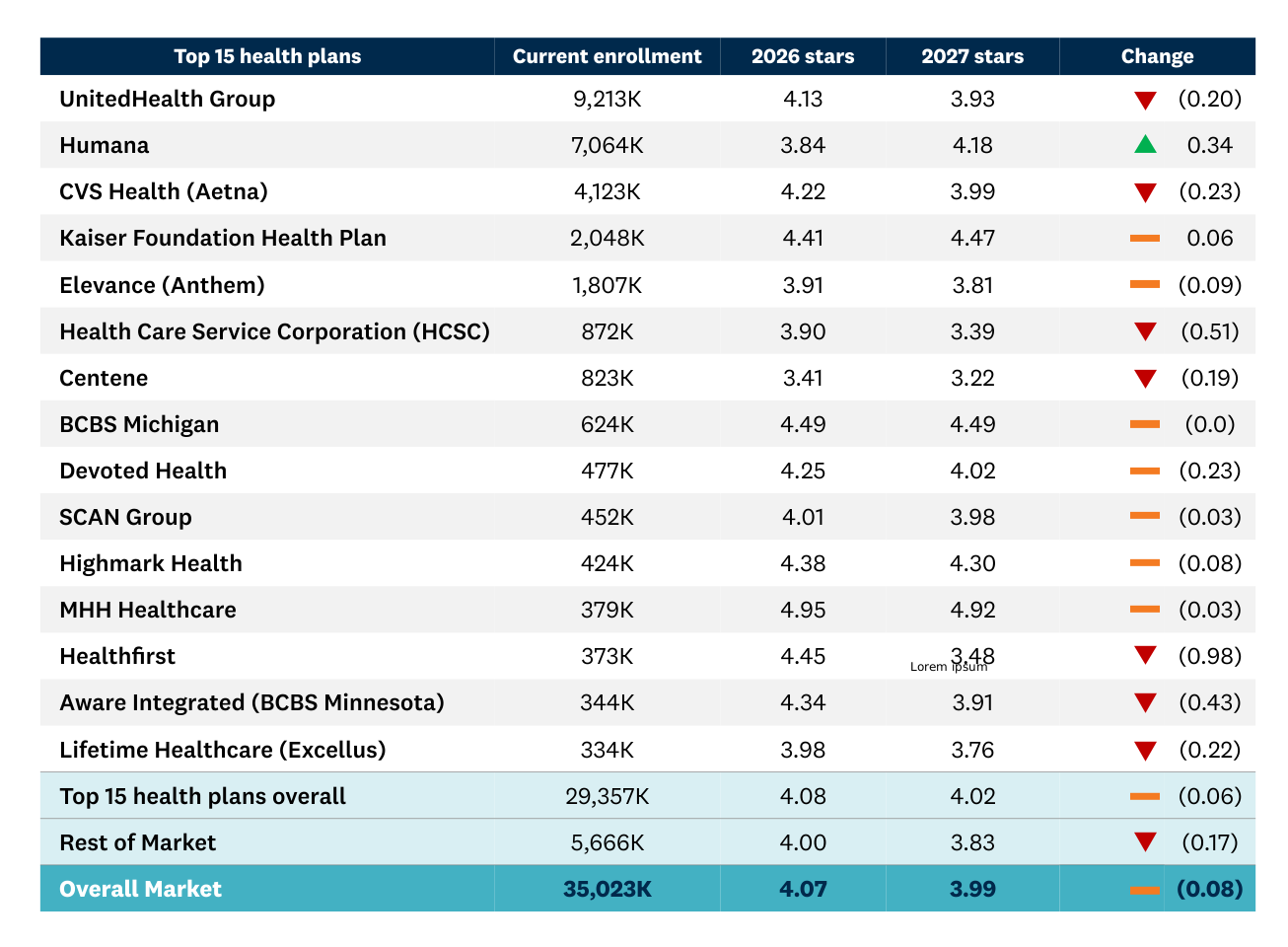
When looking at the top 15 plans by enrollment, notable findings include:
- The market’s average Star rating declined to 3.99 in our enrollment-weighted analysis, which is down slightly from 4.07 last year.
- Star ratings for the largest health plans declined modestly, by 6 basis points, while the rest of the market saw a 17 basis point decline.
- Humana had the most significant increase to its enrollment-weighted Star rating for 2027, materially improving its performance by 0.34 Stars. Humana successfully improved its largest H contract (H-5216) to 4 Stars and has been transparent in investor commentary of its strategic goal to return to top quartile Star ratings by 2028.
- Healthfirst, HCSC, Aware Integrated (BCBS Minnesota), and Aetna had the most significant decline in their enrollment-weighted Star ratings for 2027.
- Healthfirst saw an average decline of 0.98 Stars, and its average rating dropped below 4 Stars.
- HCSC and BCBS Minnesota experienced an average decline of 0.51 and 0.43, respectively.
- Aetna’s ratings declined by 0.23, after consecutive years of stability.
- While not Stars related, Devoted’s appearance in the Top 15 list for the first time is notable. Devoted now has the ninth largest enrollment nationally (up from 24th last year). We expect this top 15 list to continue to evolve, given the continued disruption noted in the 2027 landscape files, exits of large health plans, and discontinuation of products. (For example, BCBS Minnesota’s product terminations will impact about 250,000 members and potentially its place in the top 15.)
Shifts in 4+ Star enrollment may impact individual health plans’ future positions
Achieving 4+ Stars is critical because it qualifies the health plan for the quality bonus payment (QBP) and a greater rebate percentage.1 The health plan can reinvest both into benefits that make products more attractive, driving growth and financial performance.
The table below shows how membership in the largest 15 health plans (by total enrollment) has shifted into or out of tiers of Stars performance.
Percentage point change in membership (2026 v. 2027) by Star rating tier for top 15 health plans
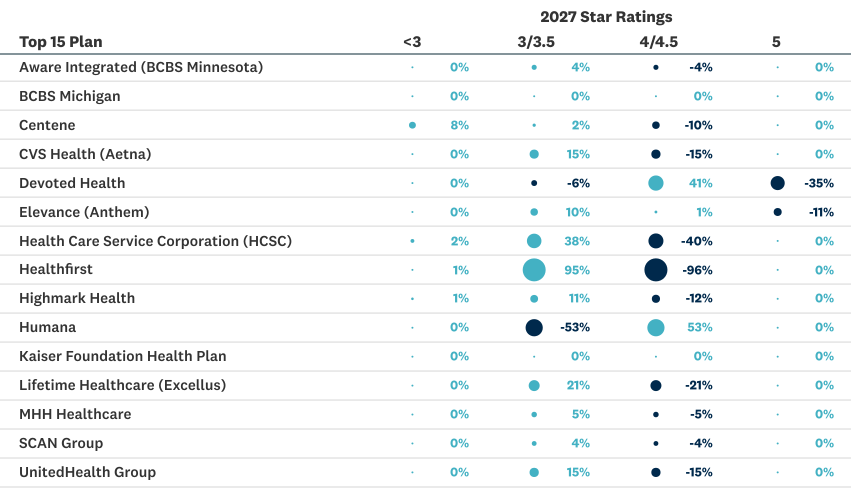
Humana and Healthfirst’s Star rating changes are most notable and demonstrate the bookends of this economic impact. Humana saw significant membership shift into 4 Star plans, which will have a positive effect on 2028 revenue as it will now receive QBP for members in these plans. On the flip side, Healthfirst saw nearly all (96%) of its membership fall below 4 Stars and will lose the QBP for these members.
While Devoted maintained most of its membership in 4+ Star plans, 35% of members fell out of 5 Star plans. While its loss of members in 5 Star contracts does not have a direct revenue impact, it does mean Devoted no longer has the advantage of 5 Star plans to market year-round (and will now be limited to marketing during the Annual Election Period).
While not shown in this chart, some health plans’ Star ratings shifted within a given tier (e.g., from 4.0 to 4.5 Stars or vice versa). That change results in a higher overall average Star rating and financial improvement from higher rebates. However, it does not impact these health plans’ QBPs.
The findings for 2027 Stars are a reminder that a stable headline number for the overall market can hide a lot of movement underneath it. One company’s rebound was enough to mask broader decline in Star ratings across the industry. Health plans that lost ground will need to absorb near-term revenue impact while rebuilding performance in an uncertain Stars environment.
Given this uncertainty, health plans that earned 4+ Stars cannot be assured of the same performance year-over-year. The critical point for Medicare Advantage Organizations is to ensure a strong understanding of performance drivers and how to maintain or improve Star ratings as the market continues to evolve.
Additional contributors: Owen Denn, Consultant
Sources:
Centers for Medicare & Medicaid Services (CMS) Medicare Advantage September 2026 Enrollment and 2027 Medicare Advantage Part C and D Star Ratings Data Tables, HealthScape Advisors analysis.
Enrollment-weighted Stars ratings are based on the most recent enrollment data available for the respective plan year. For example, MY2026 and MY2027 ratings are weighted by September 2026 enrollment. Health plans without a Star rating in a given year are excluded from that year’s analysis. Employer/Union Direct and Standalone Prescription Drug Plans were excluded.